Federalist No. 7 was written by Alexander Hamilton under the name Publius and published on November 15, 1787. In this essay, Hamilton continues the argument from Federalist No. 6 that disunion would not lead to peace among the states. But here he gets much more specific. Instead of talking mainly about human nature in general, he lays out the actual kinds of disputes that would likely erupt if the states broke apart: territory, commerce, taxes, public debt, legal conflicts, and foreign alliances.
This is one of the more practical Federalist essays. Hamilton is not dealing in vague warnings. He is saying, in effect: if the Union breaks, here is the list of things the states will start fighting about.
1. The states would have the same motives for war as everyone else
“precisely the same inducements which have, at different times, deluged in blood all the nations in the world.”
Hamilton opens with force. If anyone asks why separated American states would go to war, his answer is simple: for the same reasons everyone else always has.
2. Territorial disputes are a classic cause of war
“Territorial disputes have at all times been found one of the most fertile sources of hostility among nations.”
This is one of the strongest lines in the paper. Hamilton points straight to land disputes as one of the oldest and most reliable causes of conflict.
3. The West would become a battlefield of claims
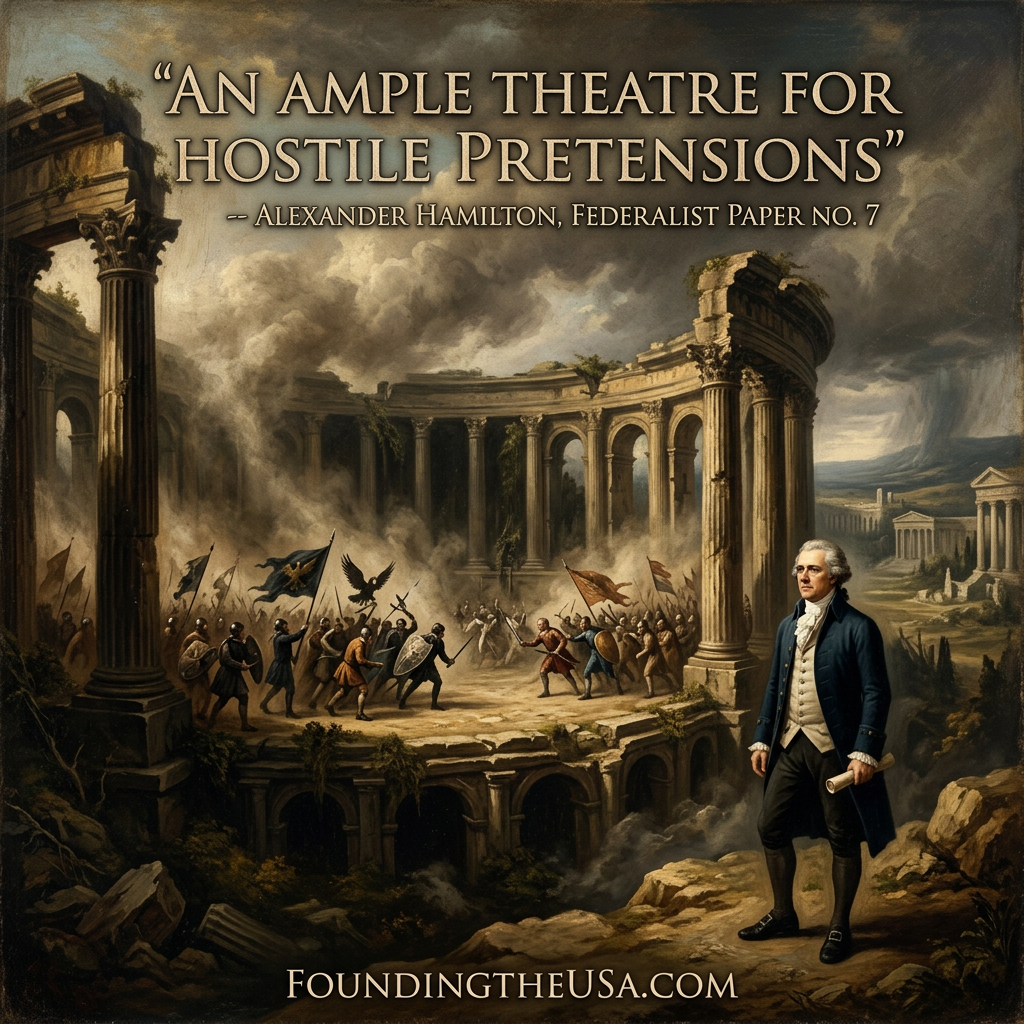
“an ample theatre for hostile pretensions”
That phrase is excellent. Hamilton is describing the western lands as a giant stage for overlapping claims, rival ambitions, and future conflict if there is no common authority to settle them.
4. Without an umpire, the sword decides
“without any umpire or common judge to interpose between the contending parties”
This is the heart of the argument. Hamilton is saying that if the states separate, disputes do not just vanish. They lose their referee.
5. War becomes the arbiter
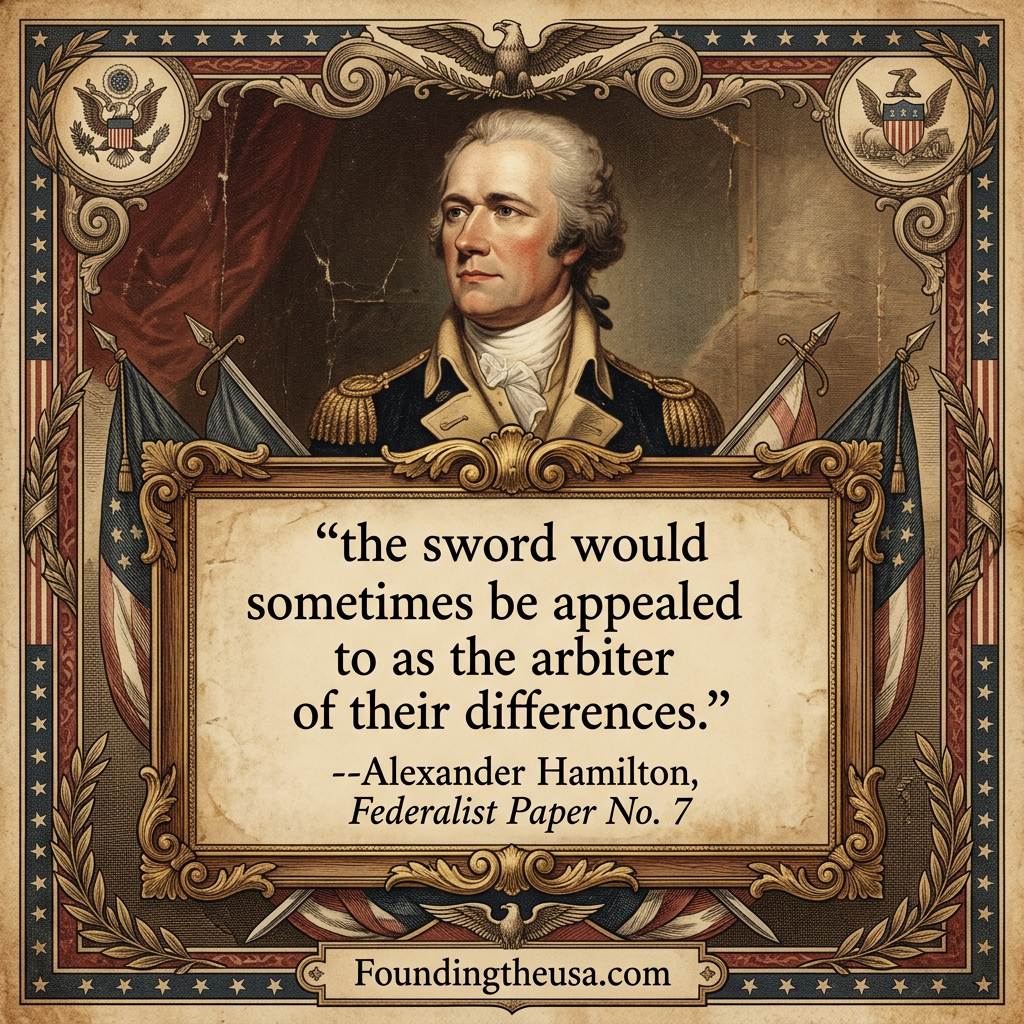
“the sword would sometimes be appealed to as the arbiter of their differences.”
Short, sharp, and memorable. Hamilton is warning that once political disputes lose a common judge, force steps in to do the judging.
6. States hate losing too
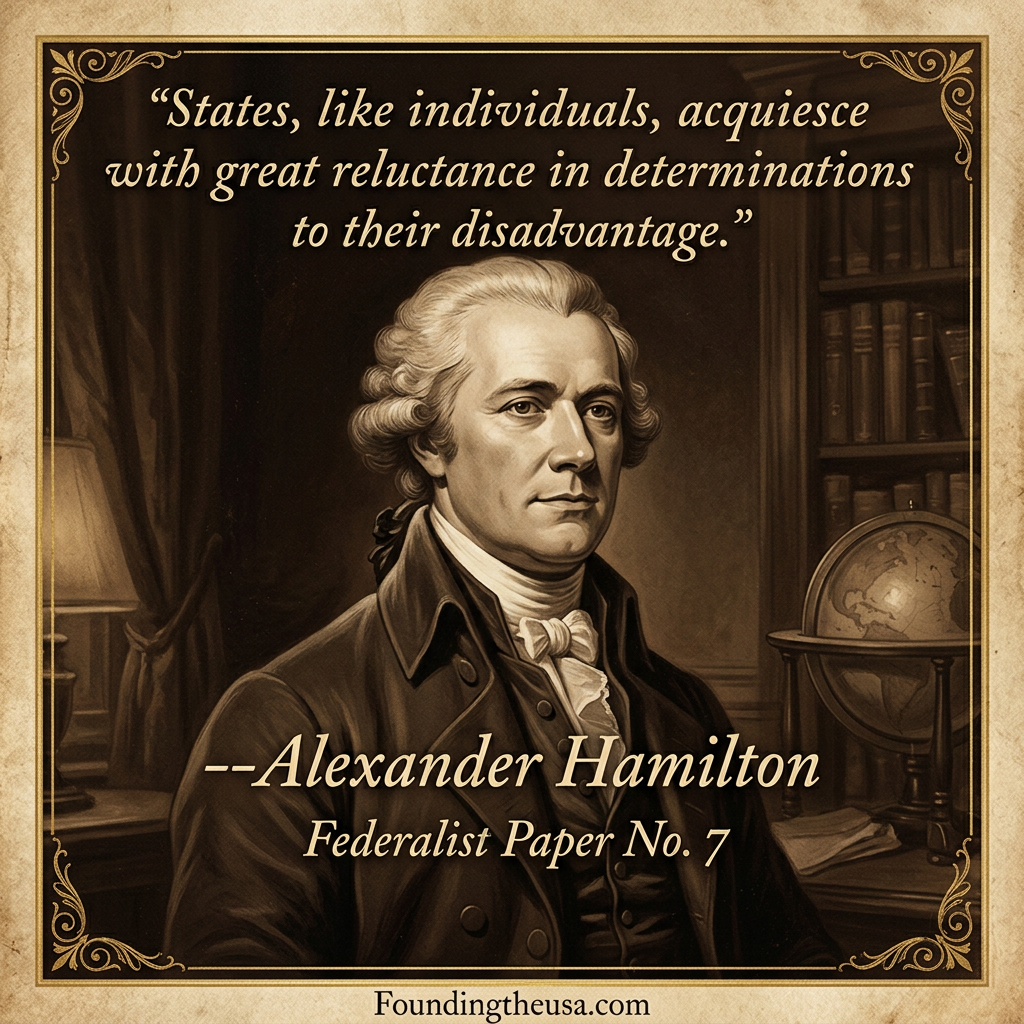
“States, like individuals, acquiesce with great reluctance in determinations to their disadvantage.”
That line still hits. Hamilton is reminding readers that governments are made of human beings, and human beings do not enjoy being told they lost.
7. Commerce would become another source of conflict
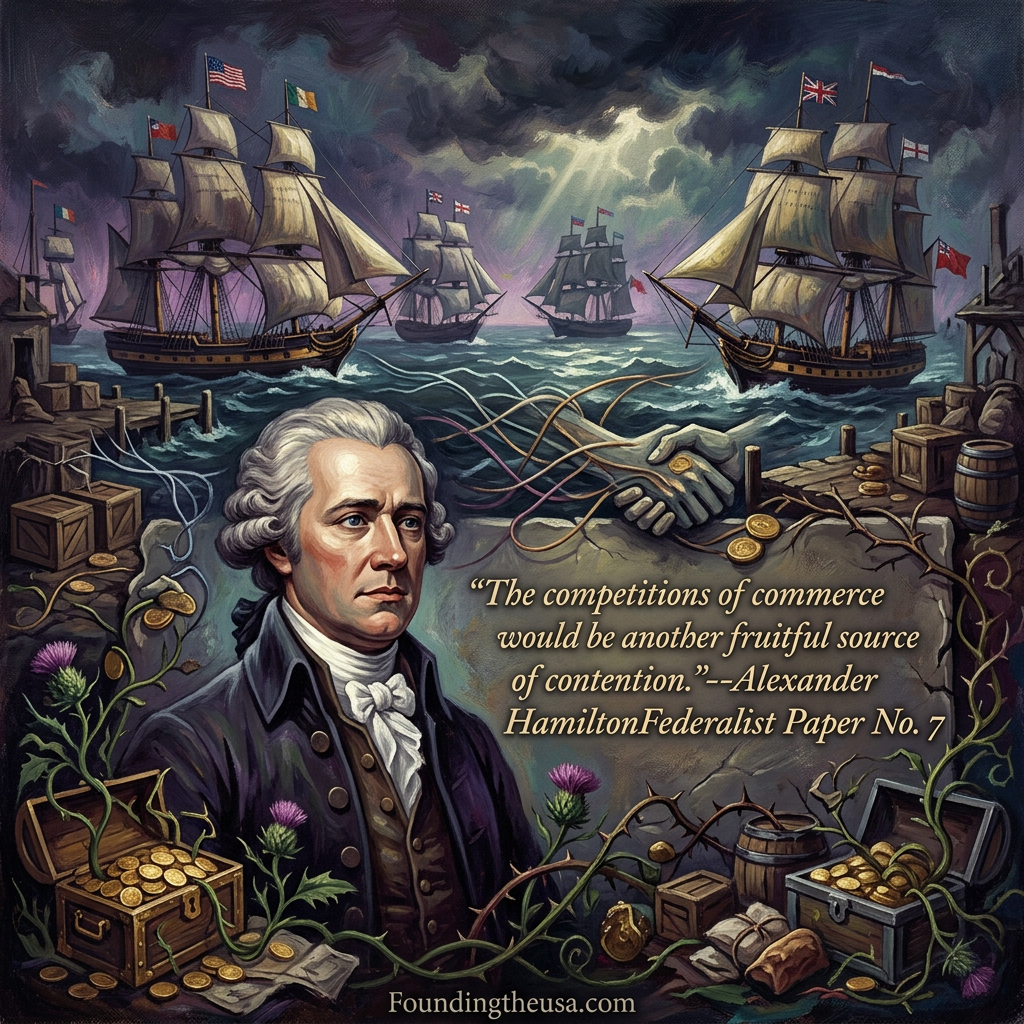
“The competitions of commerce would be another fruitful source of contention.”
This is a key Federalist point. Trade does not automatically create peace. It can also create rivalry, restrictions, resentment, and economic warfare.
8. People call injuries what are really policies
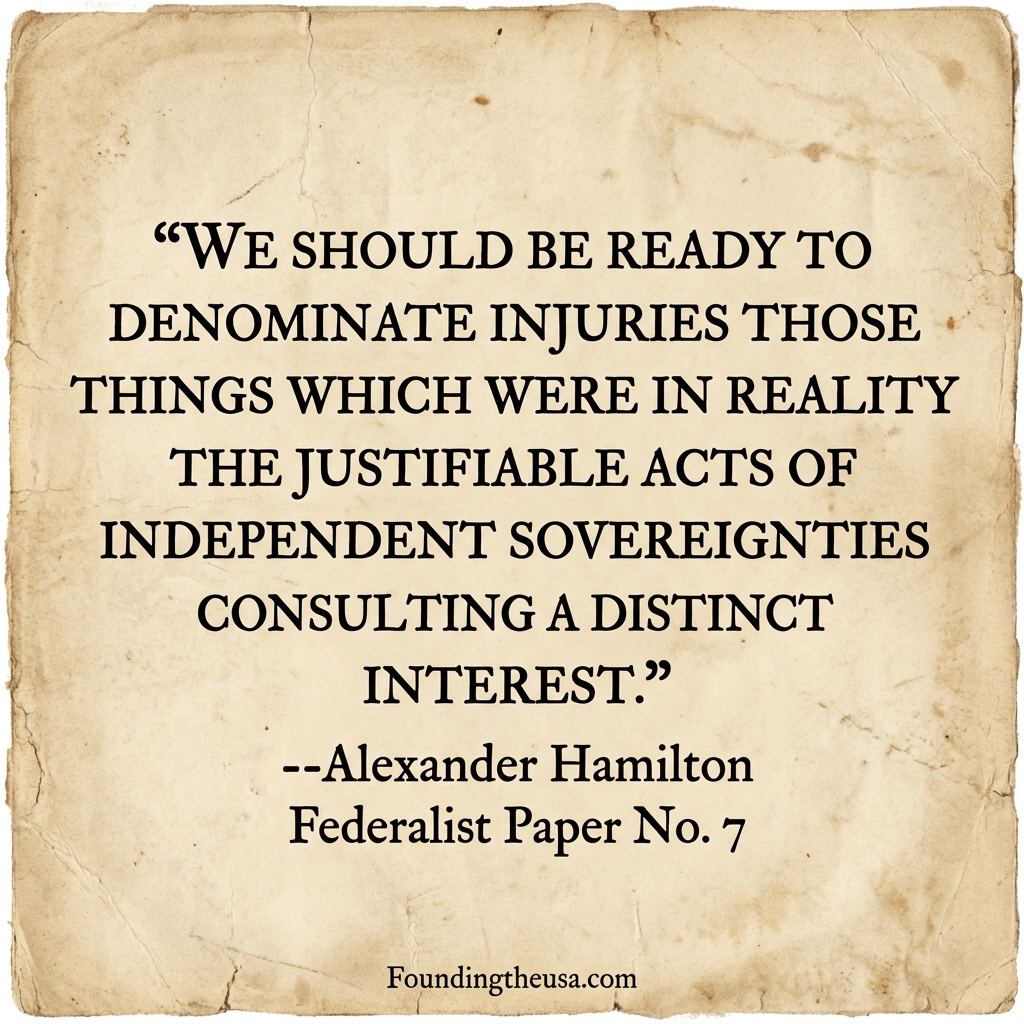
“WE SHOULD BE READY TO DENOMINATE INJURIES THOSE THINGS WHICH WERE IN REALITY THE JUSTIFIABLE ACTS OF INDEPENDENT SOVEREIGNTIES CONSULTING A DISTINCT INTEREST.”
This is one of the best quotes in the essay. Hamilton is saying separate governments will treat each other’s normal policies as hostile acts. Once the common union disappears, every trade rule and tax starts looking personal.
9. Trade disputes lead to retaliation
“The infractions of these regulations, on one side, the efforts to prevent and repel them, on the other, would naturally lead to outrages, and these to reprisals and wars.”
That is one of Hamilton’s clearest cause-and-effect warnings. Policy dispute becomes enforcement, enforcement becomes outrage, outrage becomes retaliation, and retaliation becomes war.
10. Neighbors would not calmly submit
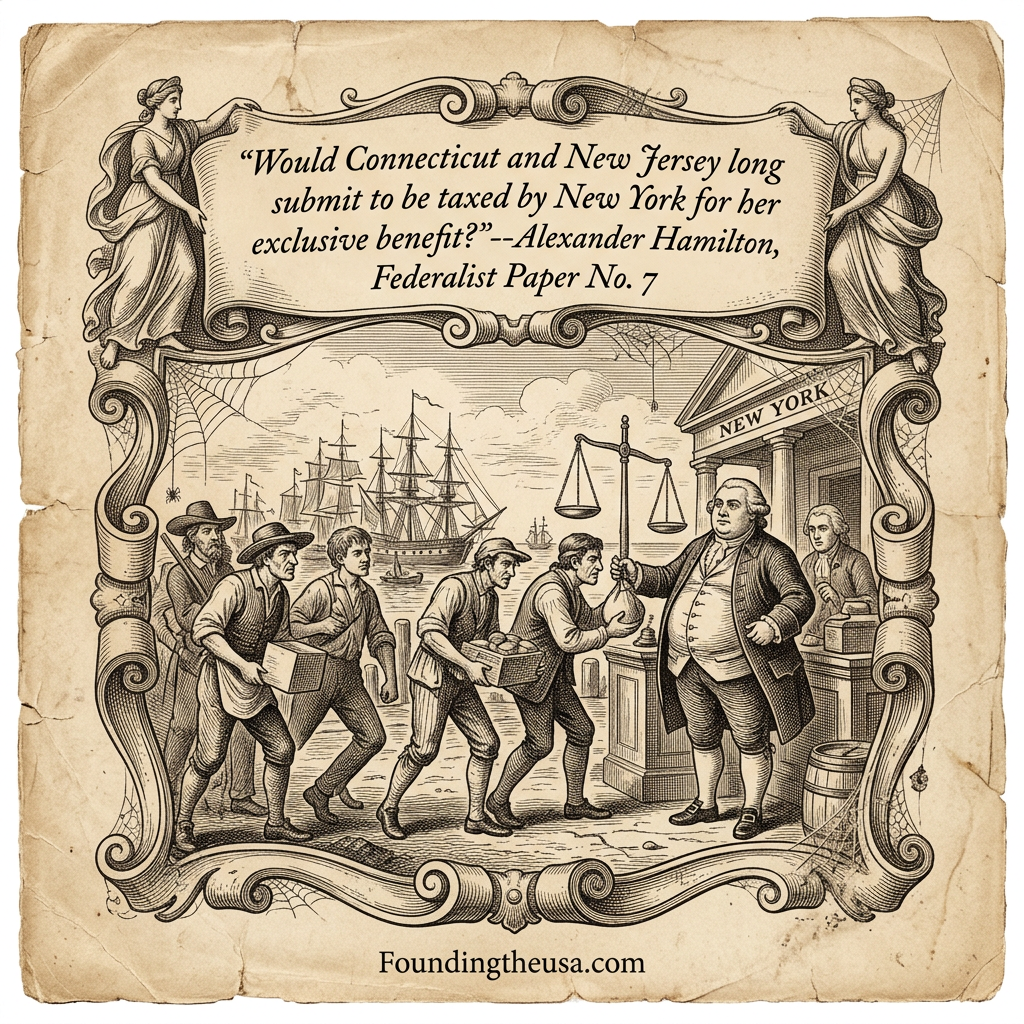
“Would Connecticut and New Jersey long submit to be taxed by New York for her exclusive benefit?”
Hamilton gets local and concrete here. This is not abstract political theory. He is pointing to the actual friction that would likely arise if neighboring states started treating trade and revenue as separate sovereign advantages.
11. Money is always a reason to quarrel
“there is, perhaps, nothing more likely to disturb the tranquillity of nations than their being bound to mutual contributions for any common object”
This is one of the most useful lines in the paper. Shared debts and shared obligations sound noble until the bill arrives.
12. People differ fast about money
“there is nothing men differ so readily about as the payment of money.”
That one is pure Hamilton and very meme-worthy. Also, unfortunately, timeless.
13. Legal injustice can become political aggression
“Laws in violation of private contracts… may be considered as another probable source of hostility.”
Hamilton is warning that bad state legislation does not stay local forever. If one state injures the citizens of another through unjust laws, that can become a larger political conflict.
14. Not parchment, but the sword
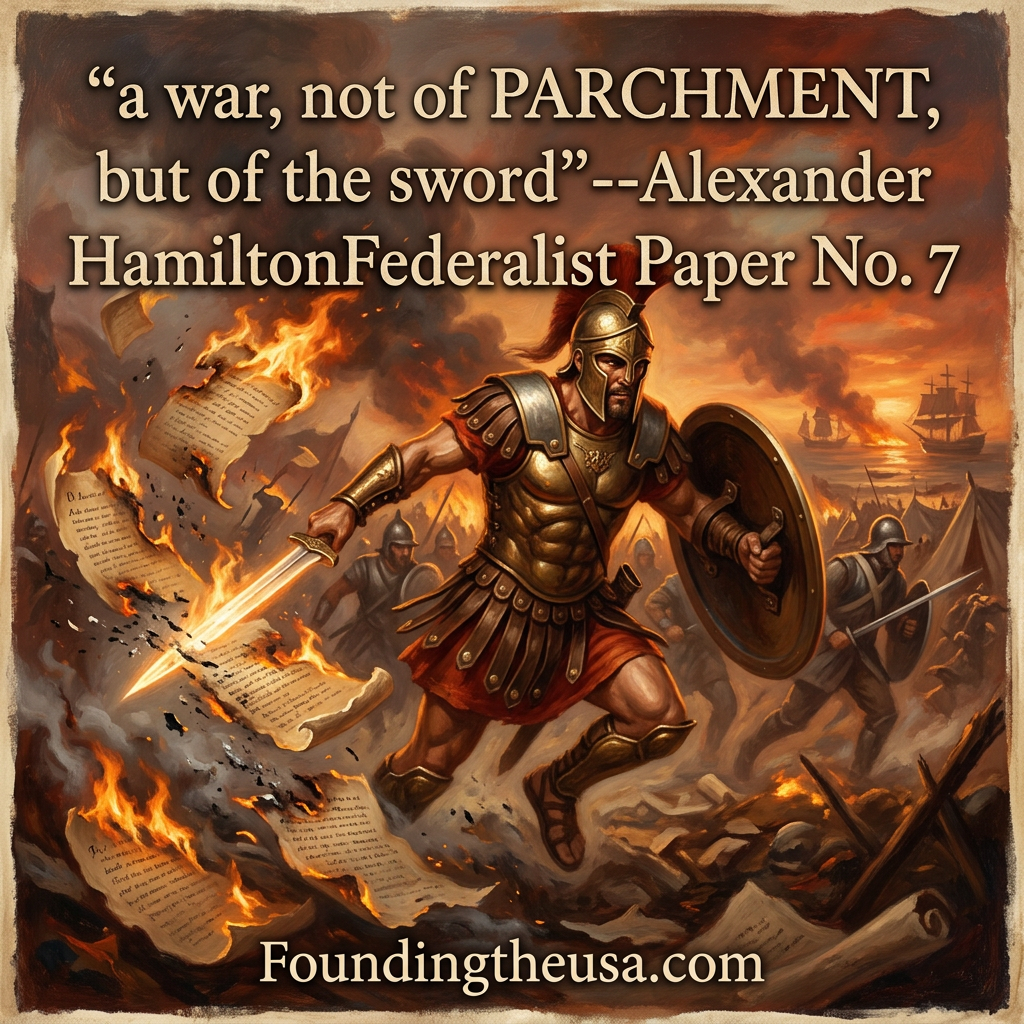
“a war, not of PARCHMENT, but of the sword”
That is one of the strongest lines in the whole essay. Hamilton is mocking the fantasy that serious interstate disputes would stay polite and paper-bound forever.
15. Foreign entanglements would get worse
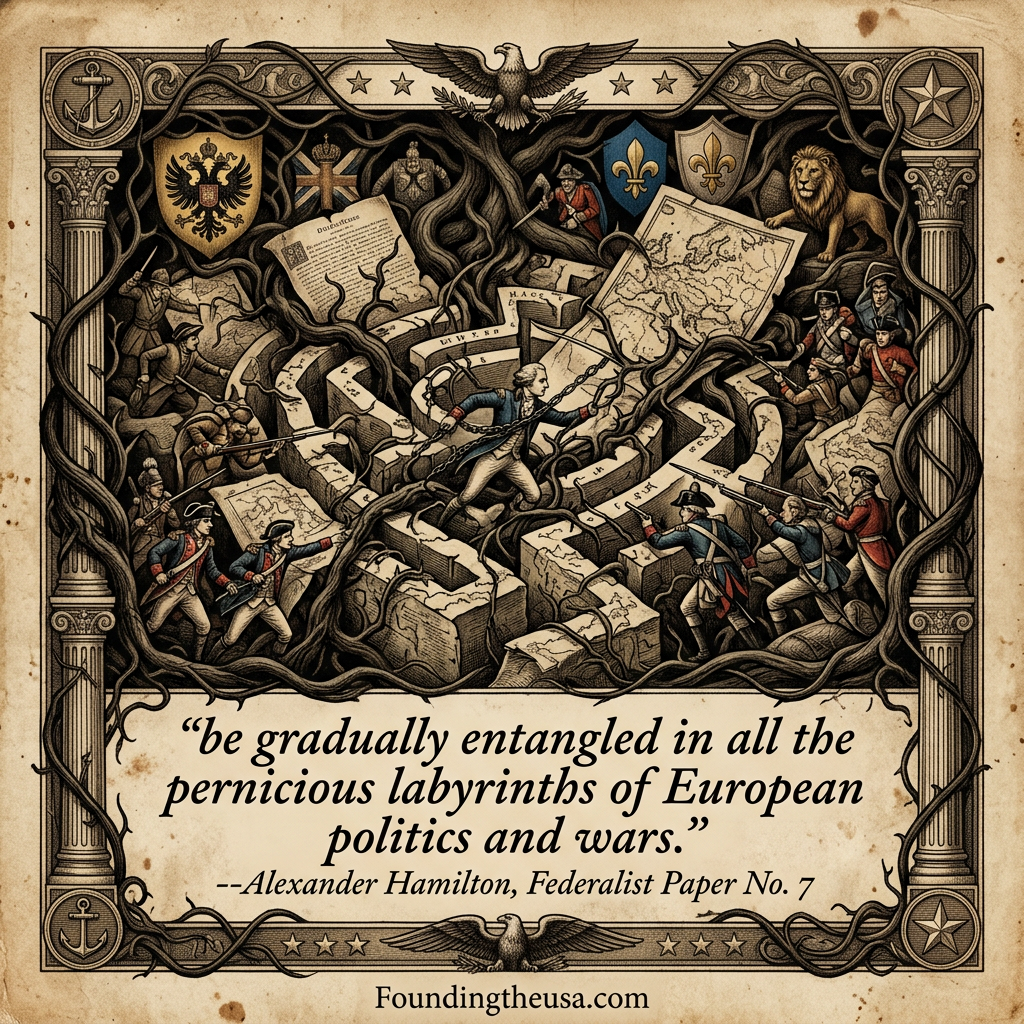
“be gradually entangled in all the pernicious labyrinths of European politics and wars”
This is a great line. Hamilton is saying separated American powers would be picked apart and drawn into foreign schemes instead of acting with one national policy.
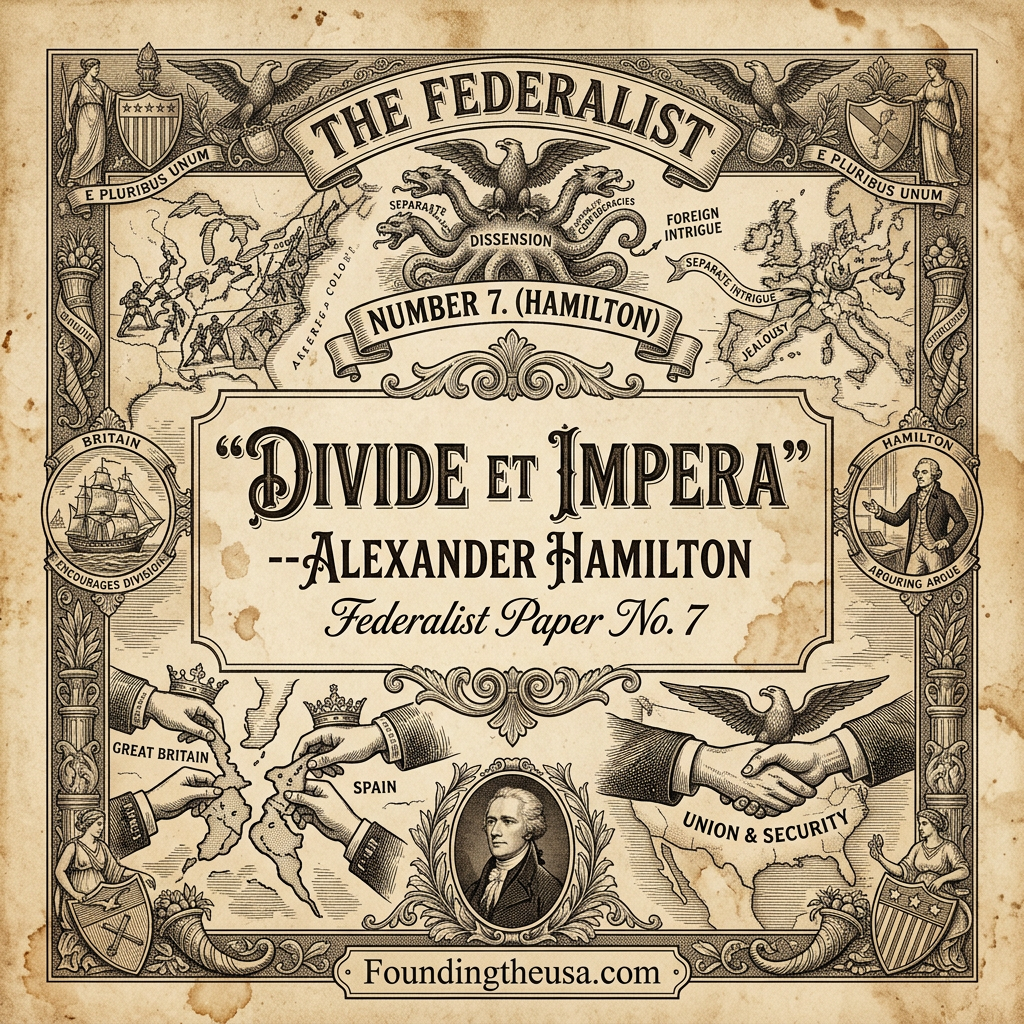
16. Divide and rule
“Divide et impera”
Hamilton closes with the old principle: divide and rule. Any foreign power that fears or hates America would benefit from seeing it broken into weaker parts.
Why Federalist No. 7 Works for Highlights
Federalist No. 7 works especially well as a highlights page because it is concrete. Hamilton is not just saying disunion would be bad. He is naming the exact kinds of fights that would follow: land disputes, trade competition, taxation, debts, contracts, and foreign manipulation.
That makes the essay very usable. It feels practical, grounded, and modern. Strip away the eighteenth-century style, and the message is still very clear: separate governments fight over borders, money, commerce, and power. That is what they do.
Related Links
- Federalist No. 7 Full Text
- Federalist Papers
- Alexander Hamilton
- Federalist No. 6
- Articles of Confederation
- United States Constitution