




Federalist No. 16 was written by Alexander Hamilton under the name Publius and published on December 4, 1787. In this essay, Hamilton continues his attack on the Articles of Confederation, arguing that a union which governs only states in their collective capacities is not a real government at all. If enforcement must be directed at states, he says, the result is likely to be force, civil war, a standing army, or collapse.
This paper matters because Hamilton sharpens one of the central Federalist claims: a genuine national government must act directly on individual citizens through ordinary laws, courts, and magistrates. Anything weaker is just a league pretending to be a government.
1. The Confederation’s principle is the “parent of anarchy”
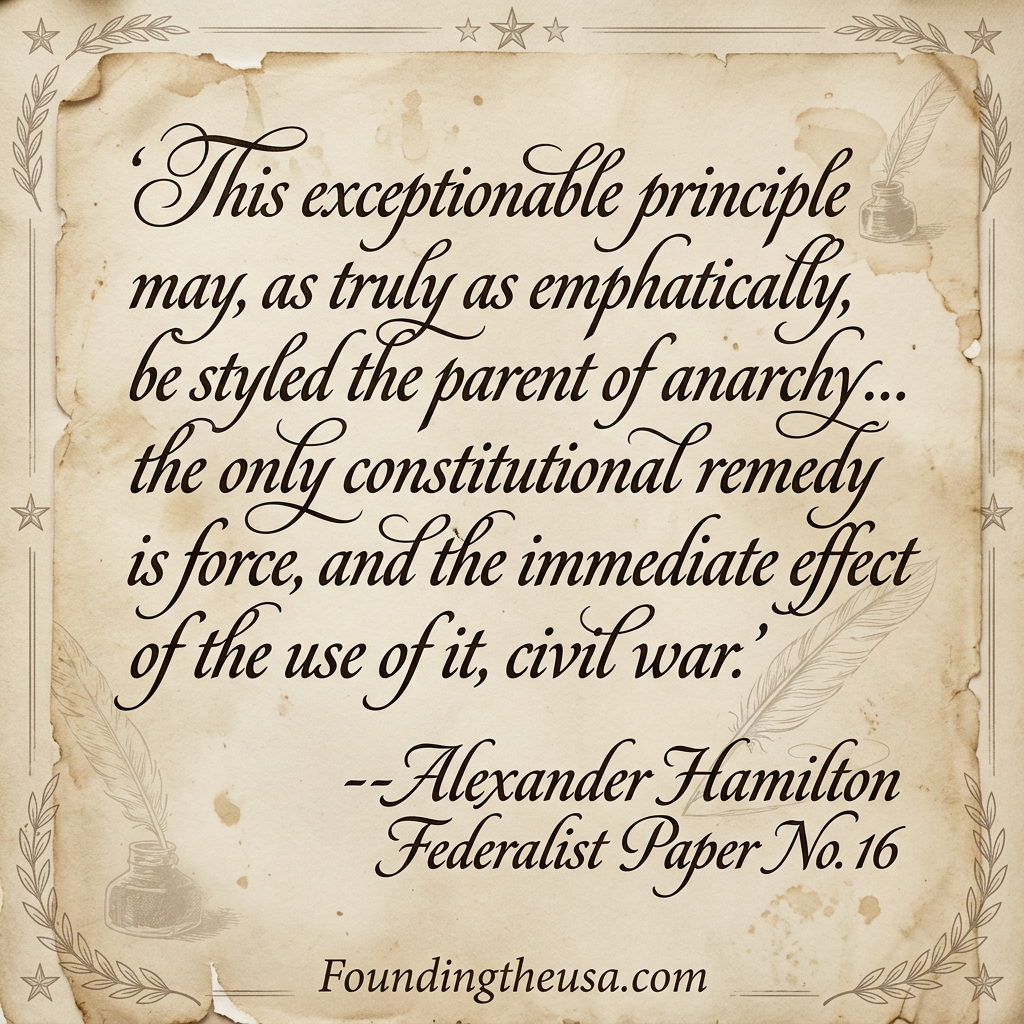
“This exceptionable principle may, as truly as emphatically, be styled the parent of anarchy… the only constitutional remedy is force, and the immediate effect of the use of it, civil war.”
That is the heart of the paper in one combined blow. Hamilton says the Articles’ core defect is structural: when the Union governs states instead of citizens, noncompliance becomes normal, and enforcement becomes war.
2. Coercing states means alliances, escalation, and probably disunion
“the strongest combination would be most likely to prevail”
“When the sword is once drawn, the passions of men observe no bounds of moderation.”
“The first war of this kind would probably terminate in a dissolution of the Union.”
Hamilton’s point is that once conflict becomes state-against-state, justice no longer decides anything. Alliances, passions, resentment, and raw strength take over. And once that starts, the Union itself may not survive it.
3. Mutual delinquency becomes mutual protection
“the guilt of all would thus become the security of all.”
That is one of the cleanest lines in the essay. Hamilton is saying that if enough states ignore federal obligations, their shared disobedience becomes a shield. Everyone is guilty, so nobody gets singled out.
4. The only alternative would be a dangerous standing army
“a large army continually on foot”
“would instantly degenerate into a military despotism”
If the Union cannot govern individuals directly, Hamilton says the fallback is a permanent army big enough to force states into obedience. In his view, that is both impractical and hostile to liberty.
5. The old system is fantasy-politics
“little less romantic than the monster-taming spirit”
“the signals of bloody wars”
Classic Hamilton. He mocks the idea that large political communities can be ruled as states by military coercion without catastrophe. History, he says, points the other way: these attempts usually end in blood.
6. Real government must reach the persons of the citizens
“It must carry its agency to the persons of the citizens.”
“It must stand in need of no intermediate legislations”
“the arm of the ordinary magistrate”
This is the most important constructive point in the paper. Hamilton says a real federal government must make laws that operate directly on individuals and are enforced through normal civil processes, not through requests to state governments.
7. National authority should appear through courts, not the sword
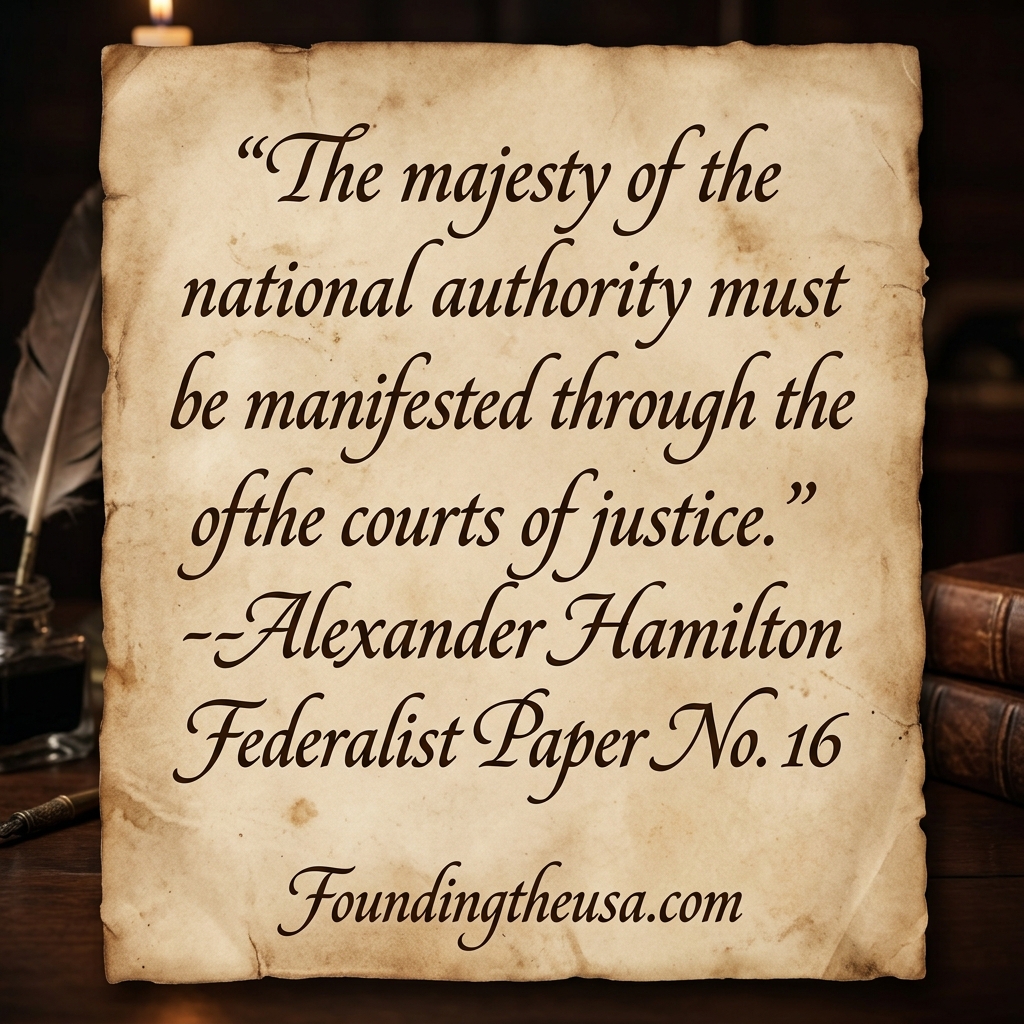
“The majesty of the national authority must be manifested through the medium of the courts of justice.”
“address itself immediately to the hopes and fears of individuals”
That is Hamilton’s preferred model of power: law, courts, and magistrates. Government works best when it shapes conduct the same way states do — directly, legally, and ordinarily.
8. There is a huge difference between state inaction and open resistance
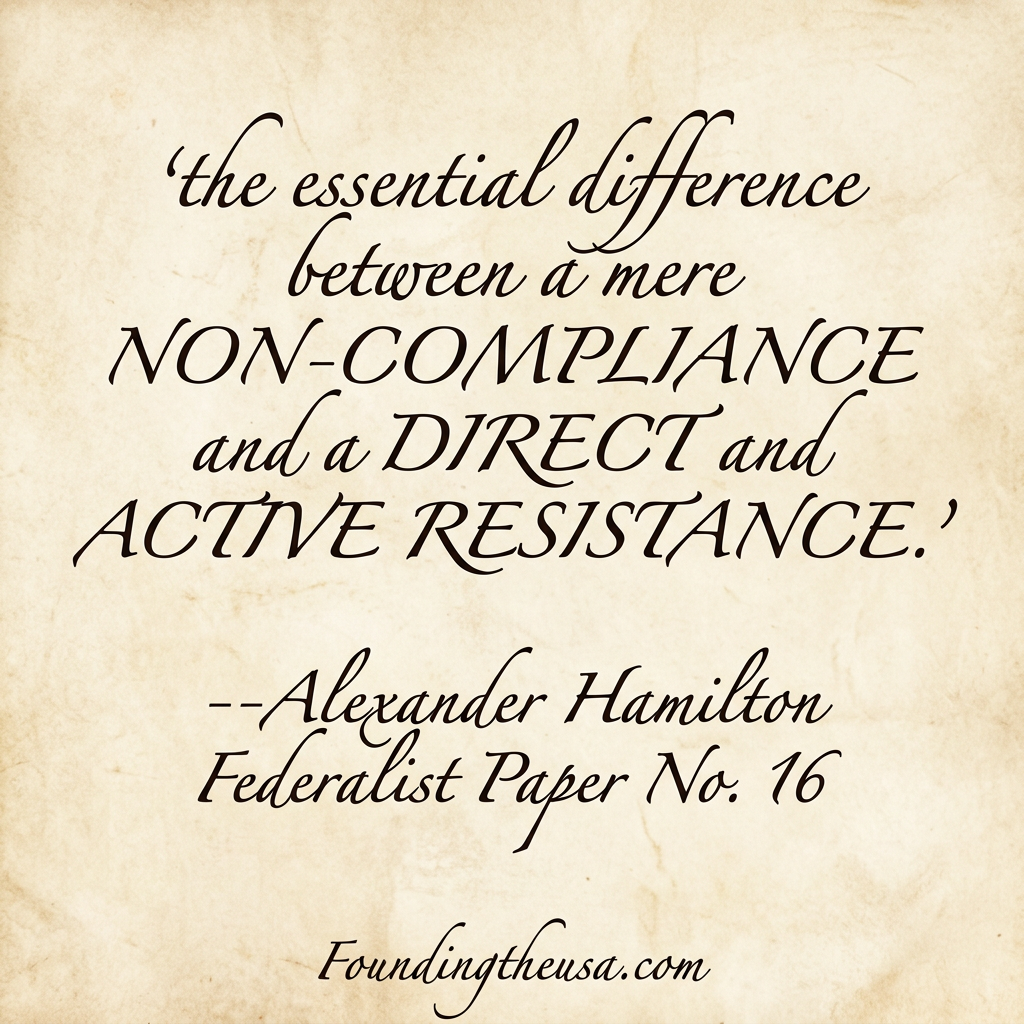
“the essential difference between a mere NON-COMPLIANCE and a DIRECT and ACTIVE RESISTANCE.”
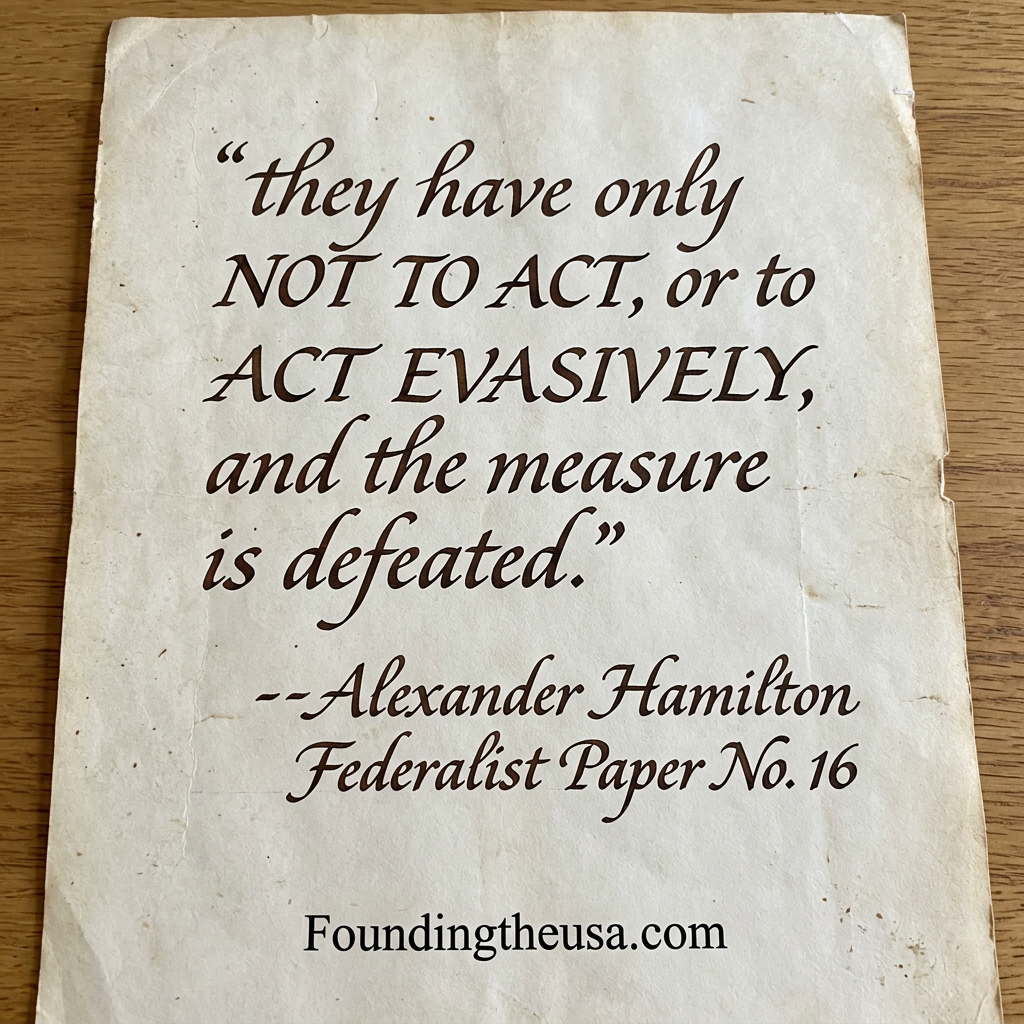
“they have only NOT TO ACT, or to ACT EVASIVELY, and the measure is defeated.”
This is one of the smartest points in the essay. Hamilton says systems that depend on state cooperation can be quietly sabotaged by delay, evasion, or inaction. Direct federal law, by contrast, can only be stopped by open resistance, which is riskier and easier for the public to see.
9. Open state resistance would be easier to expose and defeat
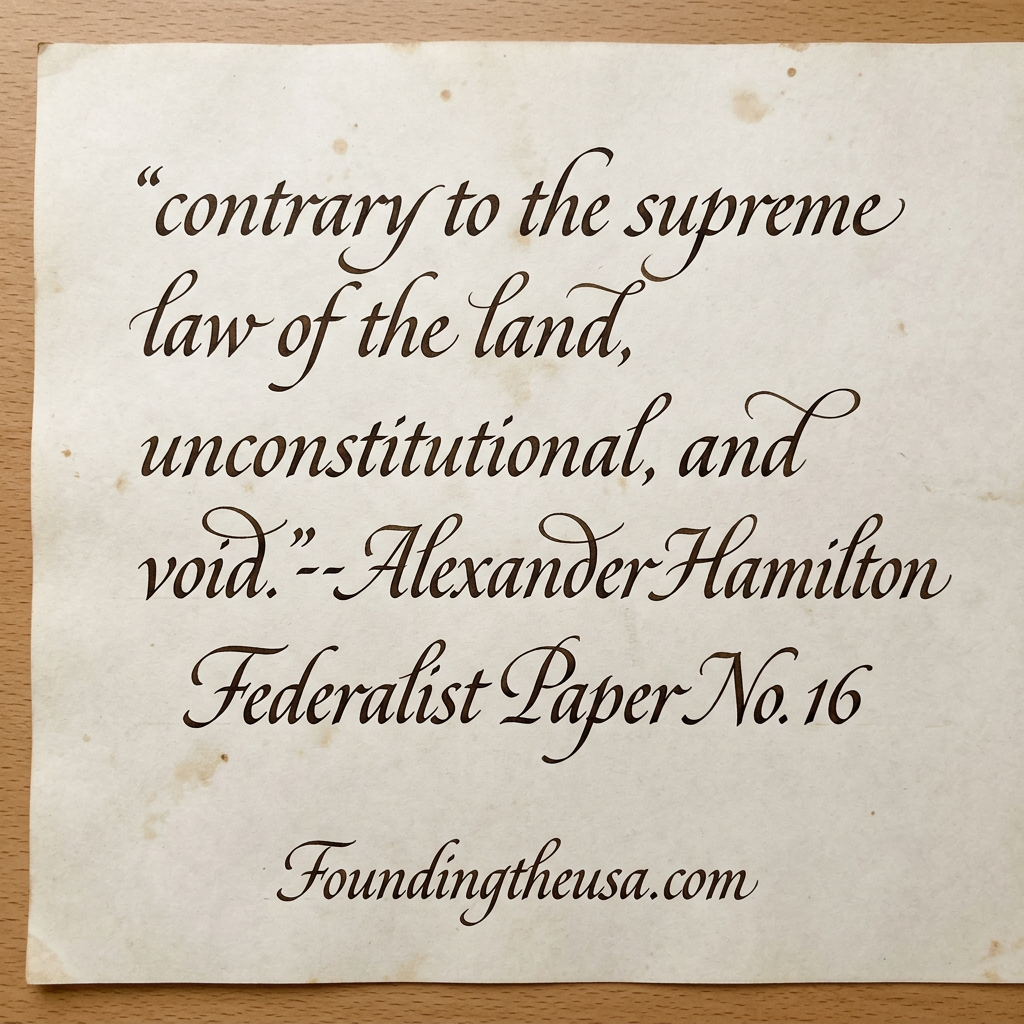
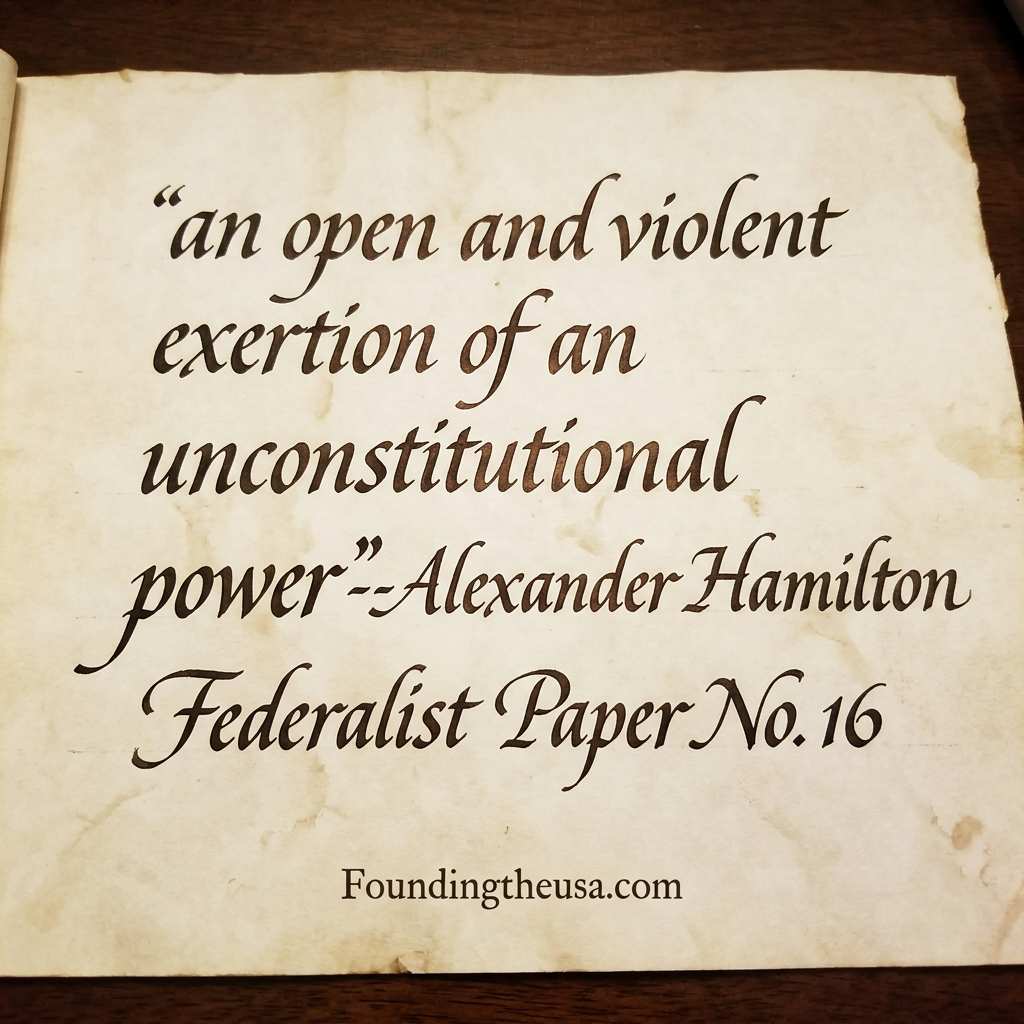
“an open and violent exertion of an unconstitutional power”
“contrary to the supreme law of the land, unconstitutional, and void.”
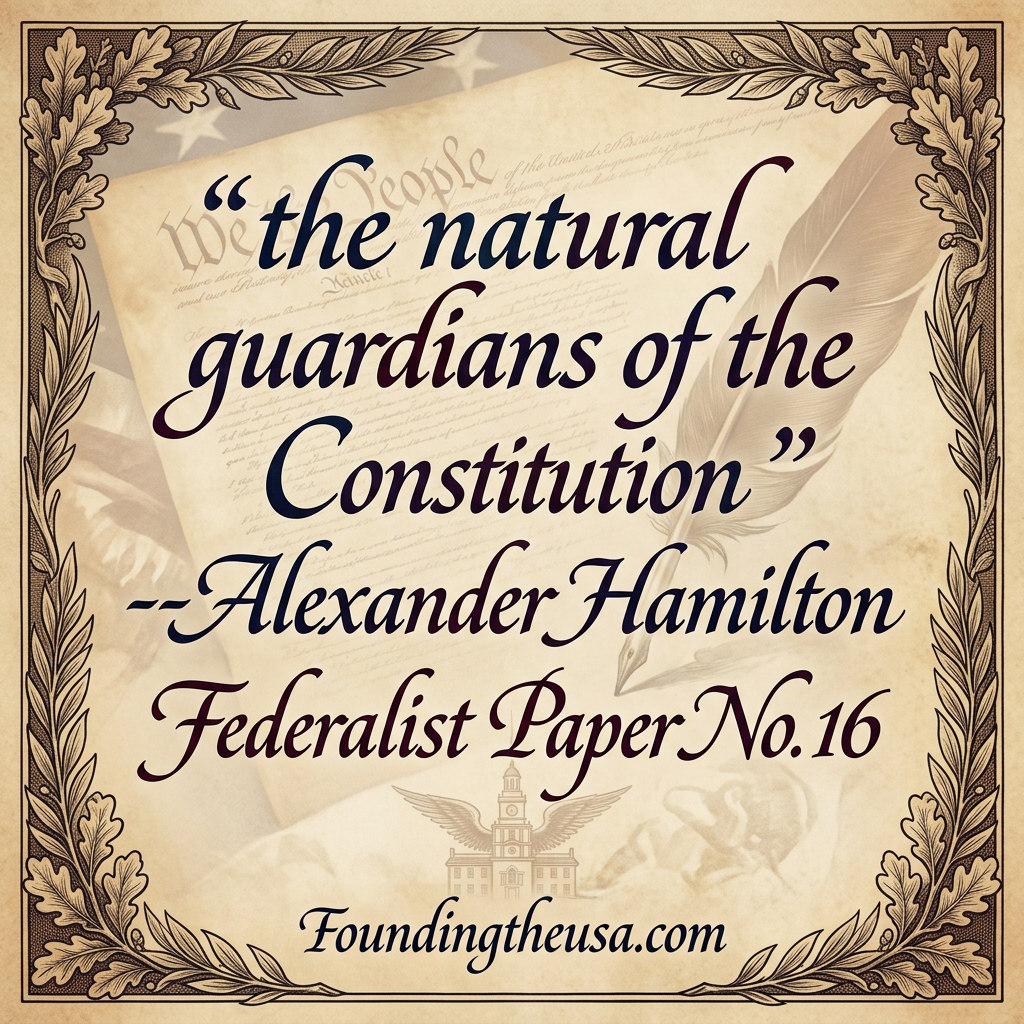
“the natural guardians of the Constitution”
Hamilton argues that if states openly obstruct national law, the courts can condemn it and the people can recognize it for what it is. Quiet sabotage is easier to hide than naked resistance.
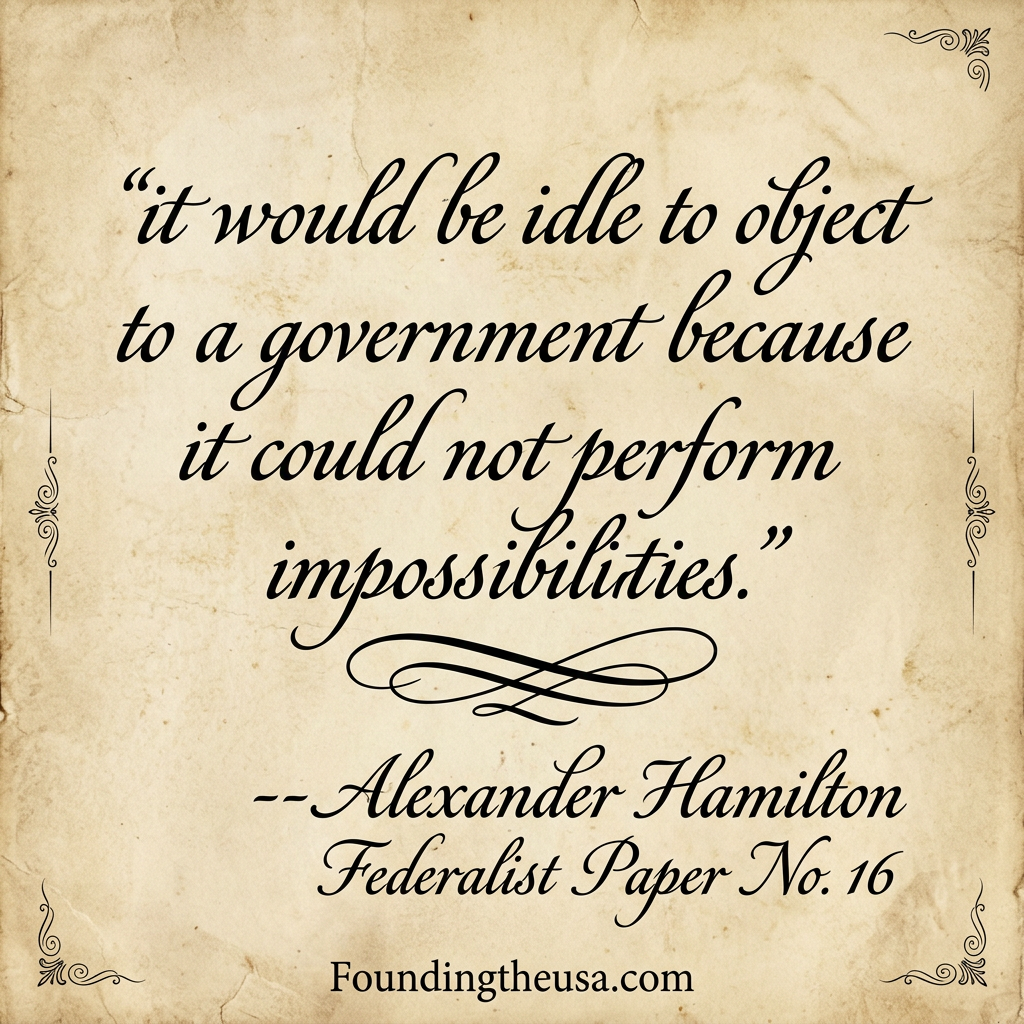
10. No government can do the impossible
“It is in vain to hope to guard against events too mighty for human foresight or precaution”
“it would be idle to object to a government because it could not perform impossibilities.”
Hamilton closes with a dose of realism. A constitution cannot prevent every revolution, mass uprising, or breakdown in human affairs. Judge it by whether it can govern effectively under normal conditions, not by whether it can suspend history itself.
Why Federalist No. 16 Works for Highlights
Federalist No. 16 works especially well because its argument is very unified: a union that governs only states is too weak, too warlike, and too unstable; a real government must govern individuals through law. Once you group the linked lines together, the paper becomes clearer and stronger.
Related Links
- Federalist No. 16 Full Text
- Federalist Papers
- Alexander Hamilton
- Federalist No. 15
- Articles of Confederation
- United States Constitution