
Federalist No. 5 was written by John Jay under the name Publius and published on November 10, 1787. In this essay, Jay continues arguing that the United States would be far safer and stronger as one Union than as several smaller confederacies. This time, he leans heavily on the historical example of England and Scotland to show how neighboring governments often fall into jealousy, rivalry, and conflict when they remain politically divided.
This paper is part of Jay’s early run on the importance of union. Federalist No. 2 argues that Americans are one people. Federalist No. 3 and No. 4 argue that union reduces foreign danger. Federalist No. 5 adds another warning: division does not produce peace. It produces suspicion, envy, and the slow decay of trust.
1. Union as the foundation of peace
“An entire and perfect union will be the solid foundation of lasting peace”
Jay opens by quoting Queen Anne’s 1706 letter supporting union between England and Scotland. He uses it to make a simple point: political union is not just convenient. It can be the basis of long-term peace and stability.
2. Union secures liberty and property
“It will secure your religion, liberty, and property”
That line matters because Jay is reminding readers that union is not the enemy of liberty. The Federalist argument, over and over again, is that a well-constructed union protects the things people care most about rather than threatening them.
3. Union removes jealousies and differences
“remove the animosities amongst yourselves, and the jealousies and differences betwixt our two kingdoms.”
This is one of the strongest themes in the essay. Jay is arguing that political division naturally breeds suspicion. Union can dampen those rivalries before they harden into long-term hostility.
4. Union increases strength and trade
“It must increase your strength, riches, and trade”
That is pure Federalist reasoning in a nutshell. Union is not just about sentiment or symbolism. It increases practical strength, economic power, and security.
5. America should learn without paying the same price
“We may profit by their experience without paying the price which it cost them.”
This is a very good line. Jay is telling Americans to learn from history instead of repeating it the hard way. That is one of the cleaner, sharper lines in the paper.
6. Division leads to endless quarrels
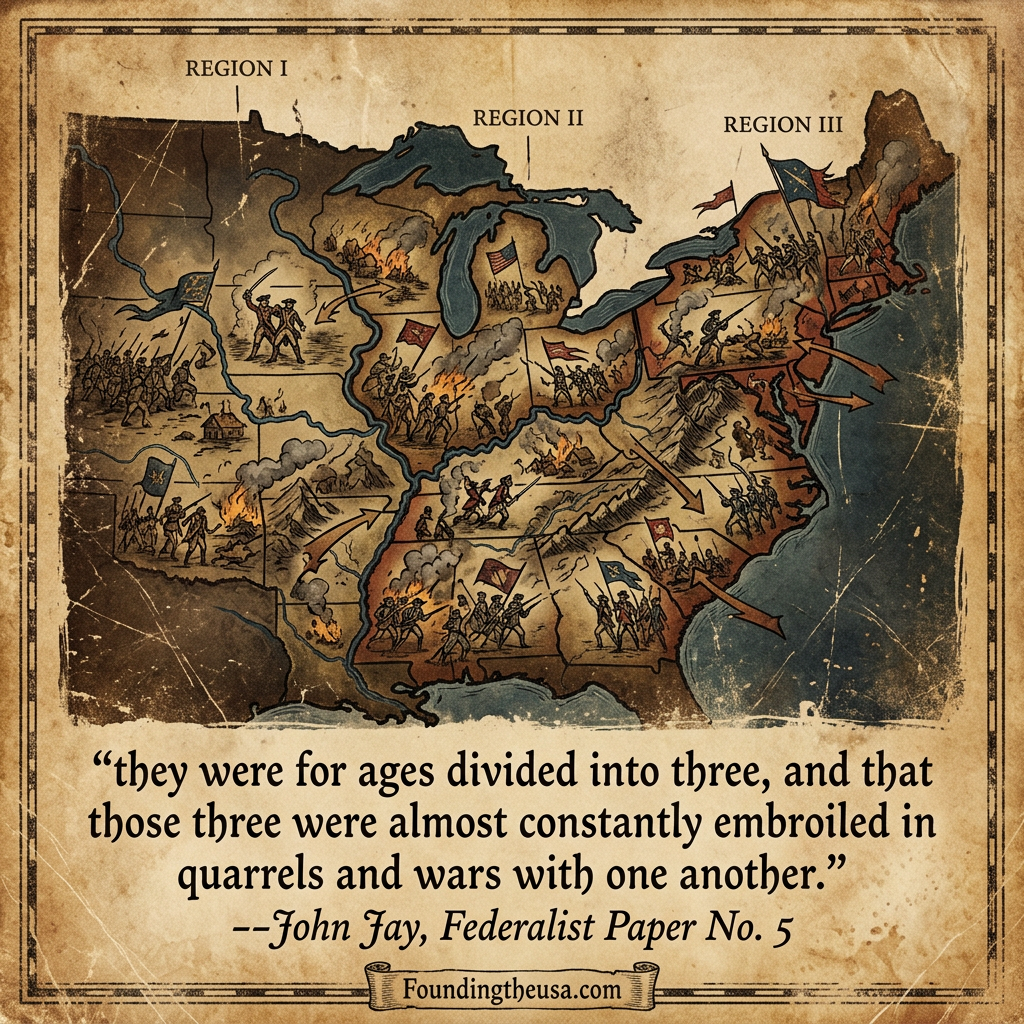
“they were for ages divided into three, and that those three were almost constantly embroiled in quarrels and wars with one another.”
Jay uses British history to show what happens when naturally related political communities stay divided. His warning is obvious: America could do the same dumb thing if it breaks into multiple confederacies.
7. Foreign powers exploit division
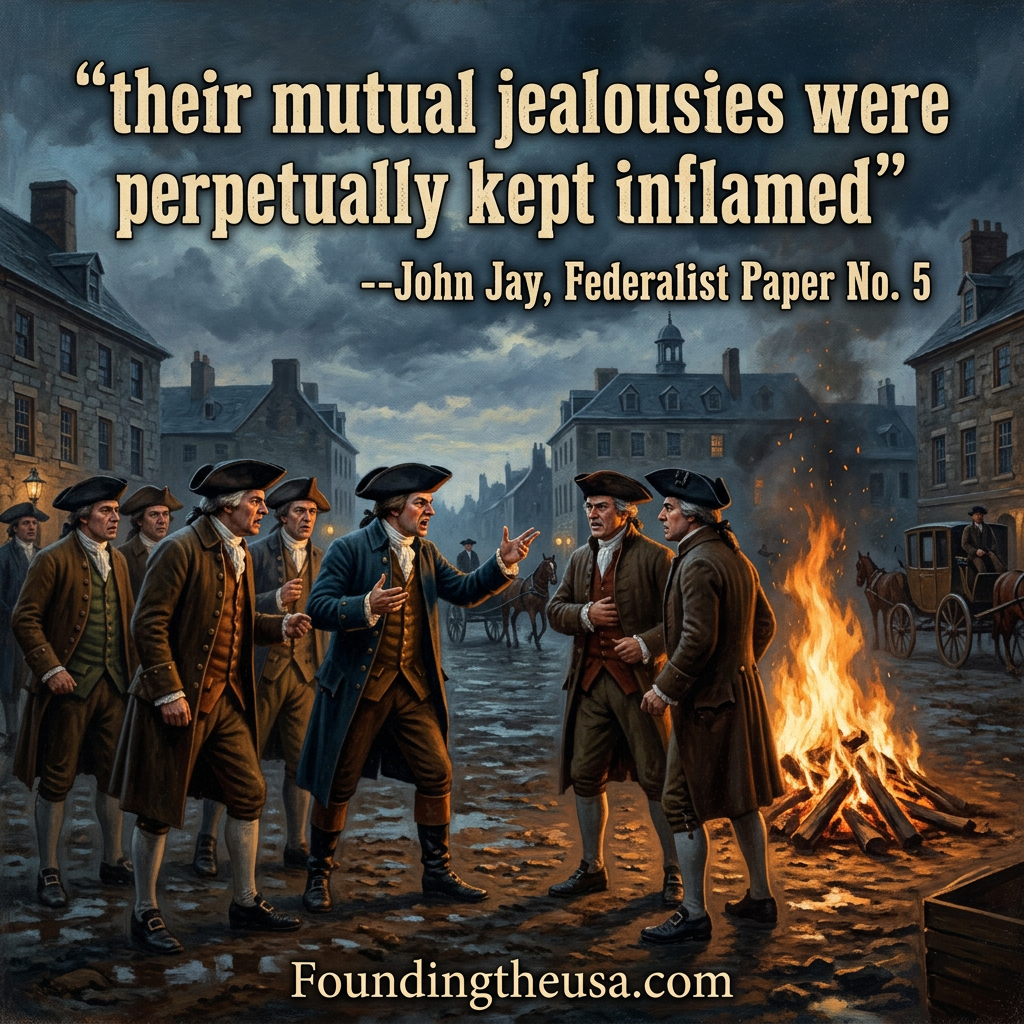
“their mutual jealousies were perpetually kept inflamed”
This line matters because Jay is not just worried about internal rivalry. He is also worried about foreign nations exploiting that rivalry. Outside powers love a divided target. That was true then and remains embarrassingly true now.
8. America would face the same danger
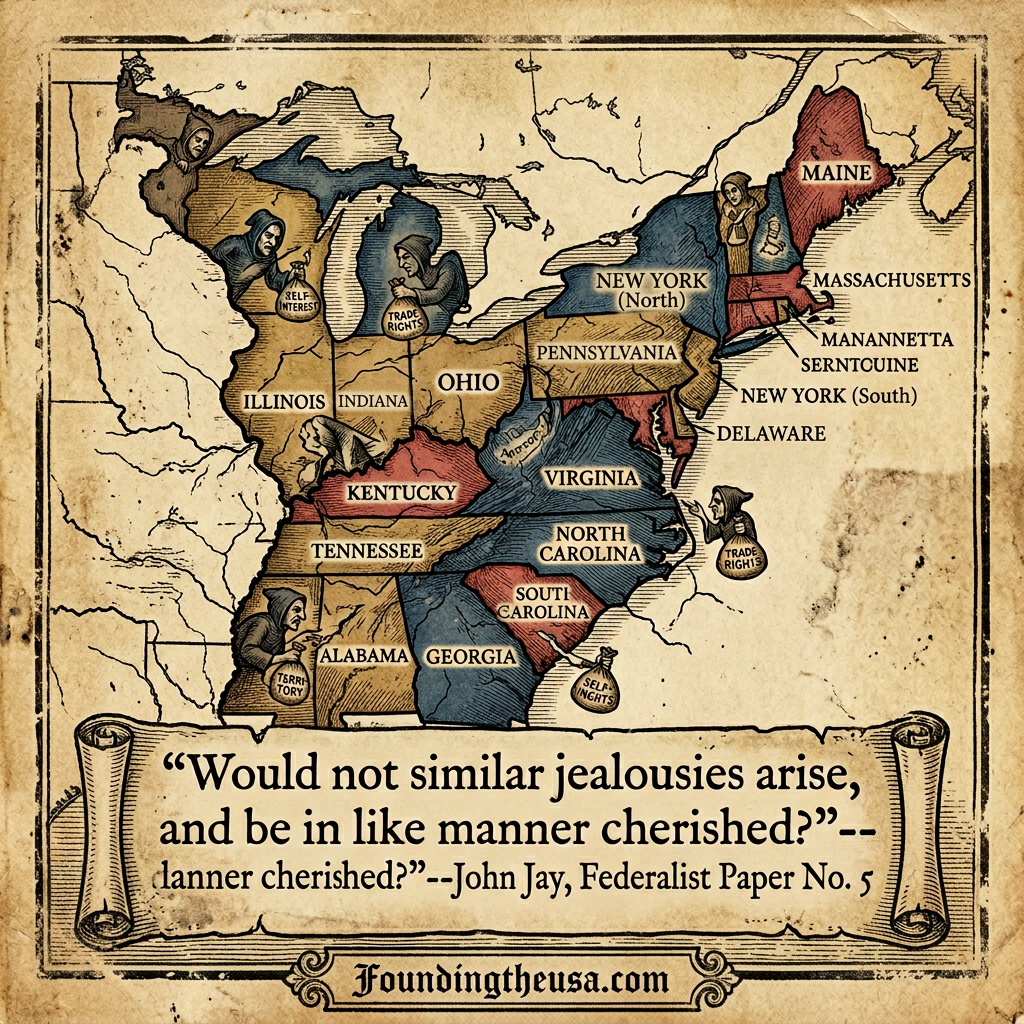
“Would not similar jealousies arise, and be in like manner cherished?”
That question is the hinge of the essay. Jay is saying: do not flatter yourselves into thinking America is too virtuous or too special to fall into the same traps as everyone else.
9. Division would destroy affection
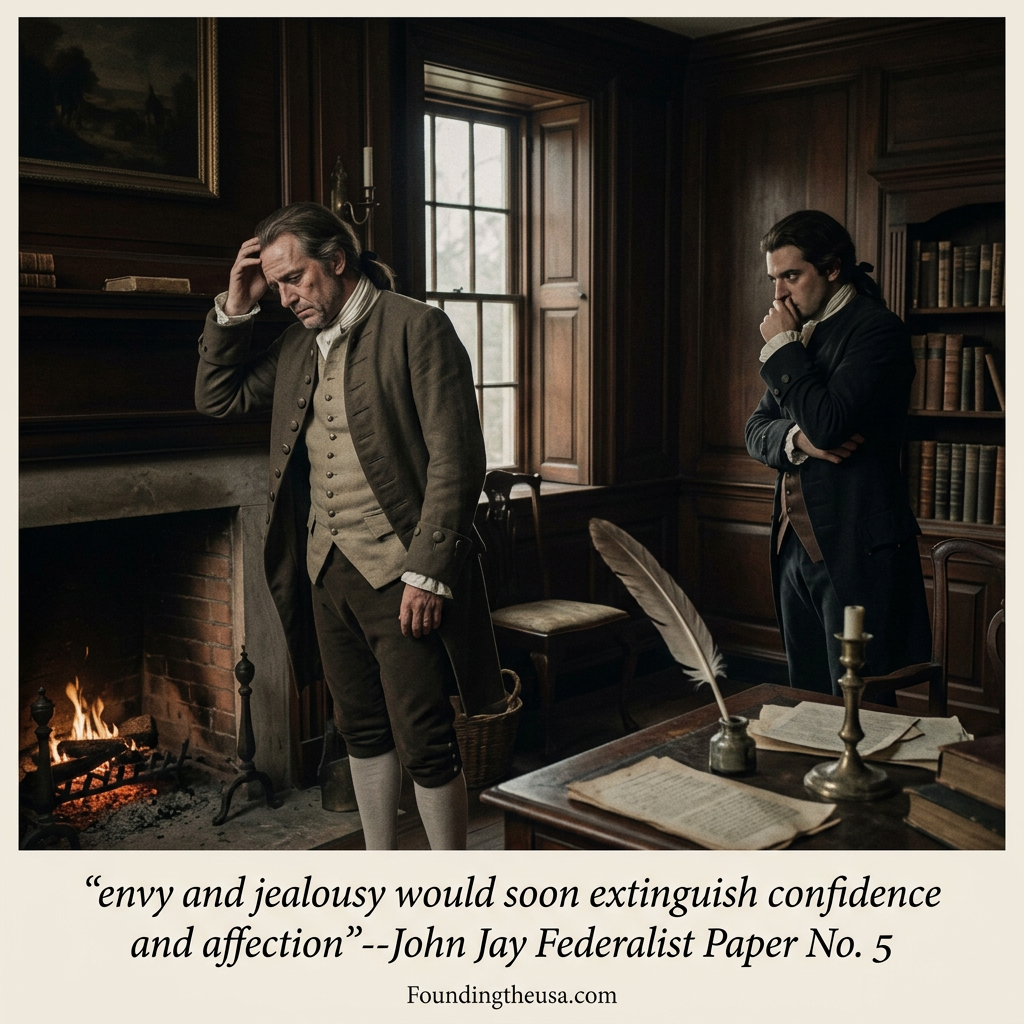
“envy and jealousy would soon extinguish confidence and affection”
That is one of the best lines in the paper. Short, sharp, and very usable. Jay is arguing that once states begin thinking of themselves as rivals rather than partners, trust dies quickly.
10. Partial interests would replace the common good
“the partial interests of each confederacy, instead of the general interests of all America, would be the only objects of their policy and pursuits.”
This is a classic Federalist concern. Jay believes divided governments would stop thinking nationally and start thinking selfishly, region by region. Once that happens, the larger American interest gets shoved off the table.
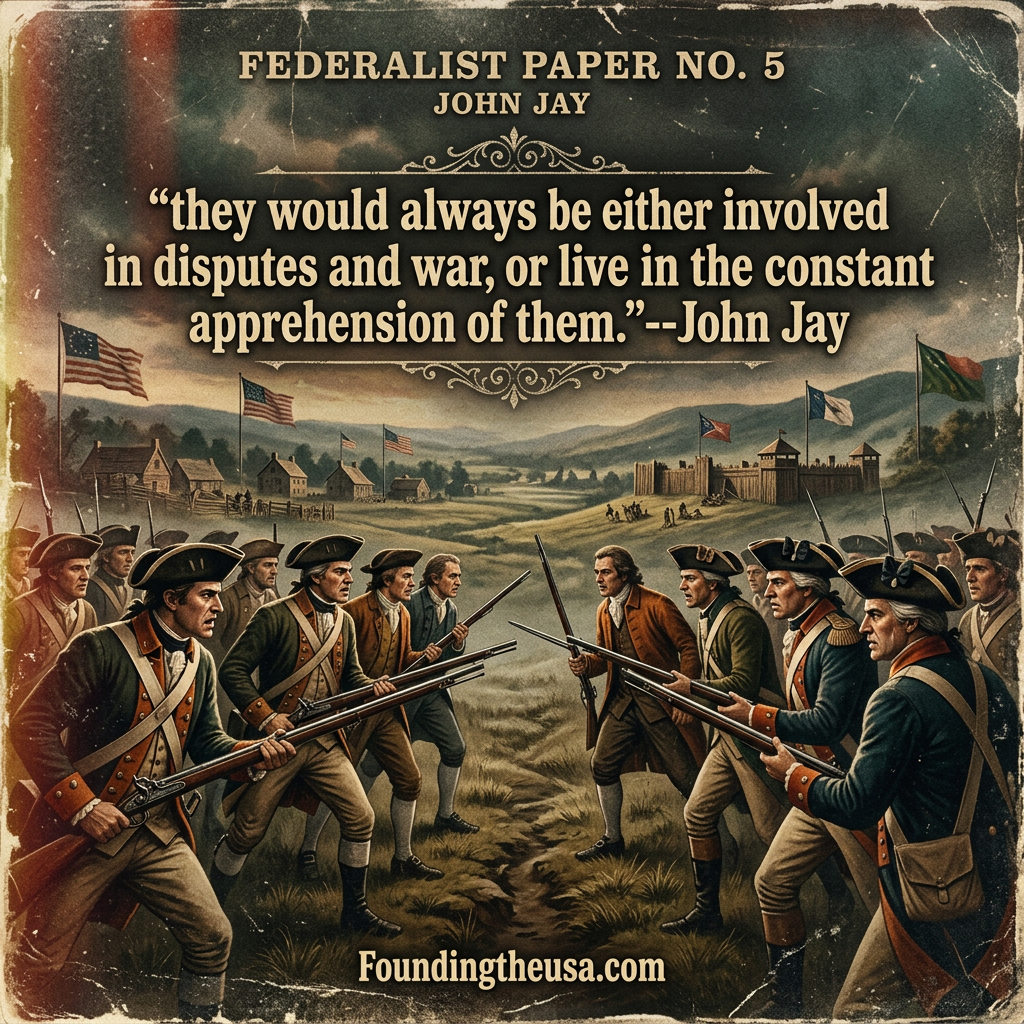
11. Division means either war or fear of war
“they would always be either involved in disputes and war, or live in the constant apprehension of them.”
That is one of the strongest warnings in Federalist No. 5. Jay is saying disunion does not create safety. It creates either actual conflict or nervous, permanent instability.
12. Equality would not last
“what human contrivance can secure the continuance of such equality?”
Jay rejects the fantasy that several confederacies could stay neatly balanced forever. One would eventually grow stronger, wiser, richer, or more effective than the others. And once that happens, fear and resentment would explode.
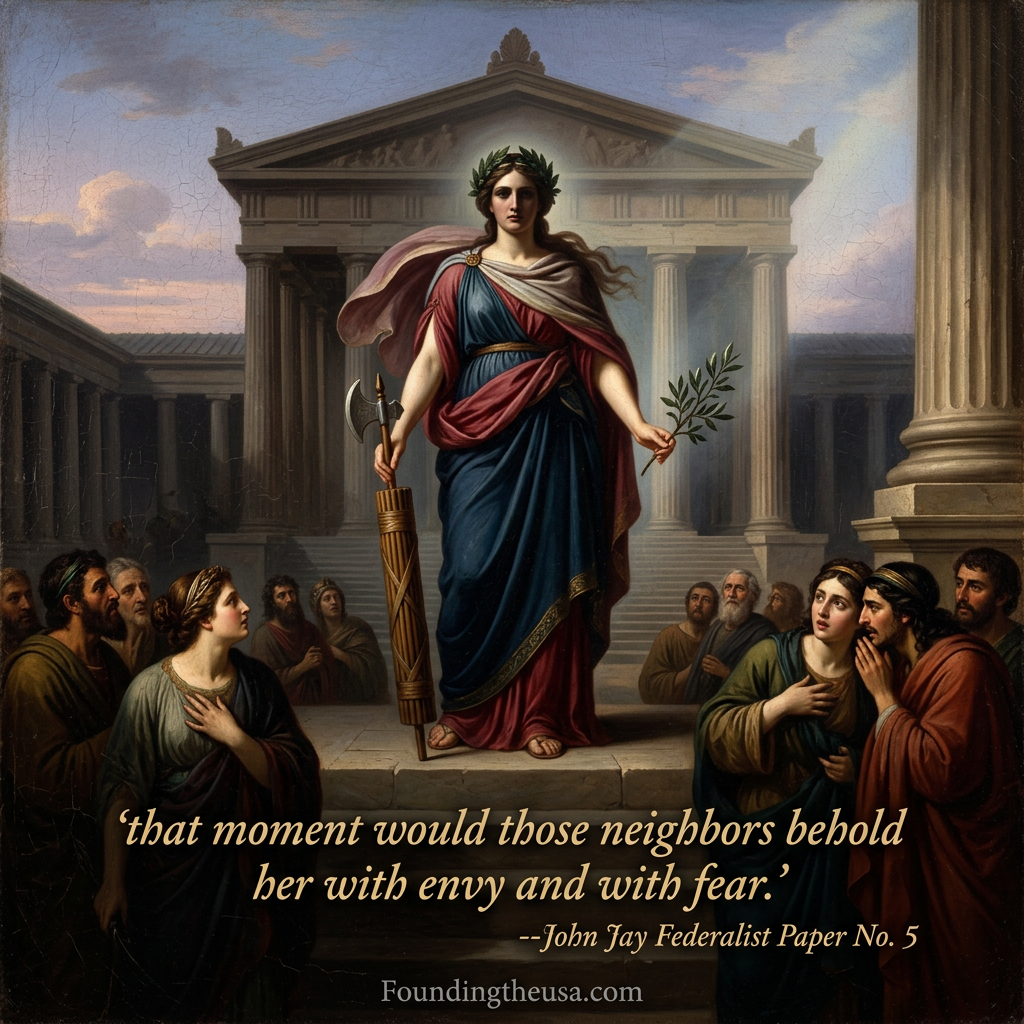
13. Rising powers create fear
“that moment would those neighbors behold her with envy and with fear.”
That line is great because it captures how quickly balance turns into tension. When one state or confederacy rises, the others do not calmly applaud. They get suspicious.
14. Distrust breeds distrust
“Distrust naturally creates distrust”
Simple. Clean. Dead accurate. This is one of the best meme lines in the paper. Jay is describing a political chain reaction: once suspicion starts, it feeds itself.
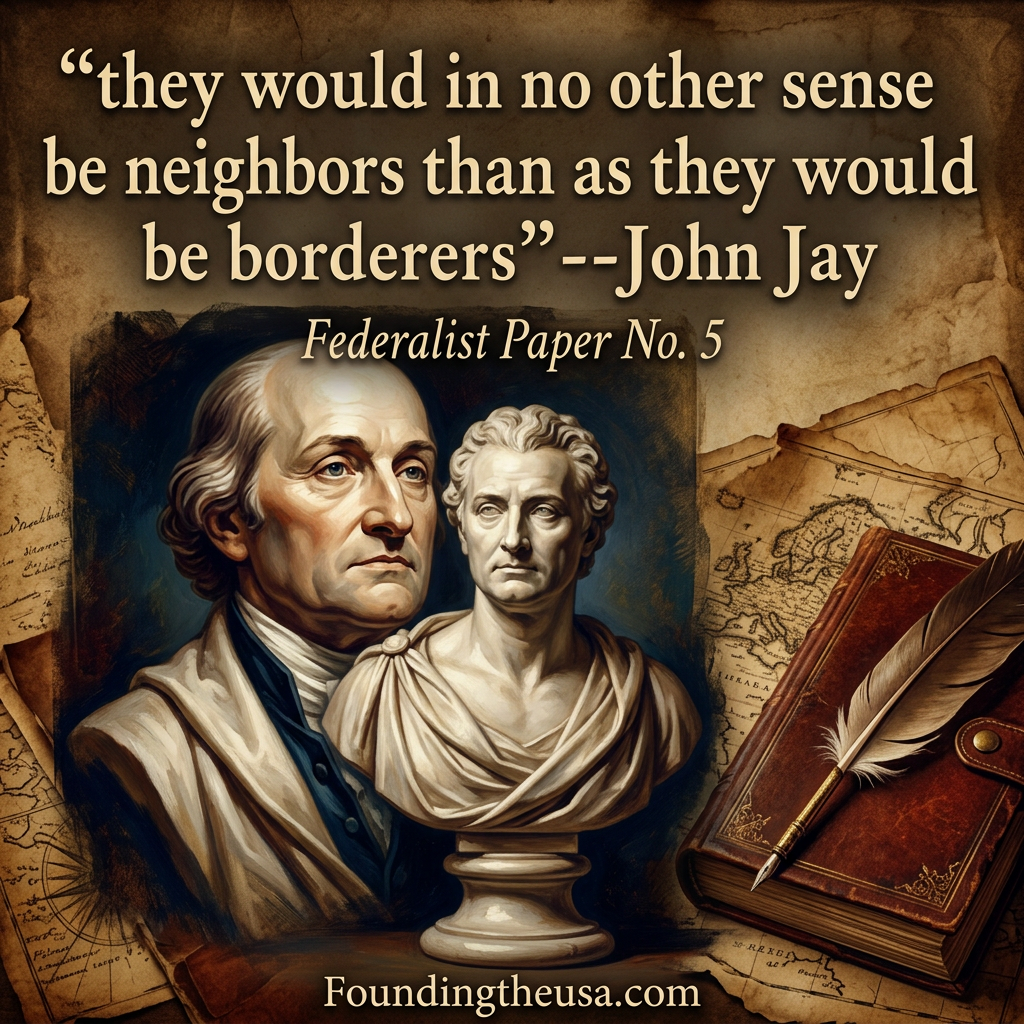
15. Division creates border rivals, not friends
“they would in no other sense be neighbors than as they would be borderers”
That is a sharp phrase. Jay is saying separated American confederacies would not behave like affectionate siblings. They would behave like tense bordering powers.
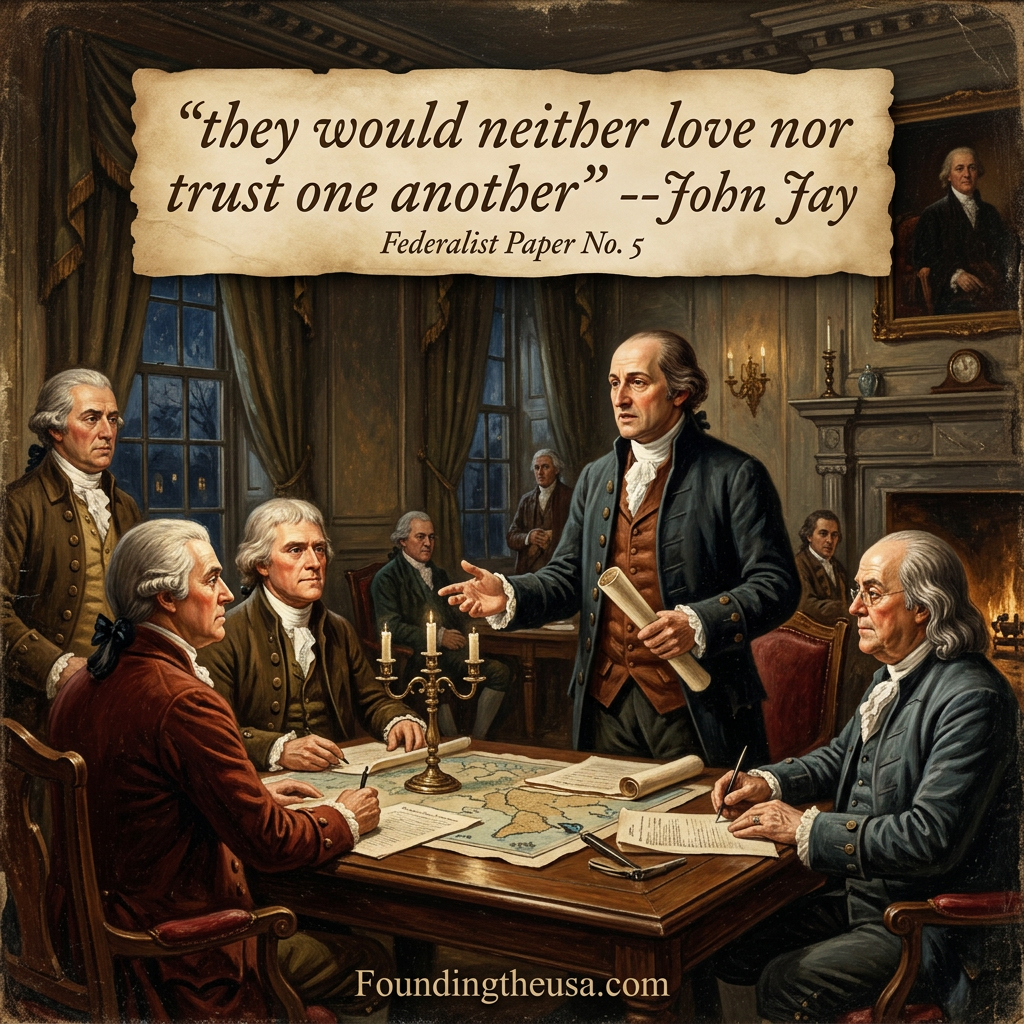
16. A direct shot at disunion
“they would neither love nor trust one another”
Brutal and memorable. Jay wants readers to stop romanticizing division. In his view, breakup would not create peaceful coexistence. It would create rivalry, fear, and thinly veiled hostility.
Related Links
- Federalist No. 5 Full Text
- Federalist Papers
- John Jay
- Federalist No. 4
- Articles of Confederation
- United States Constitution