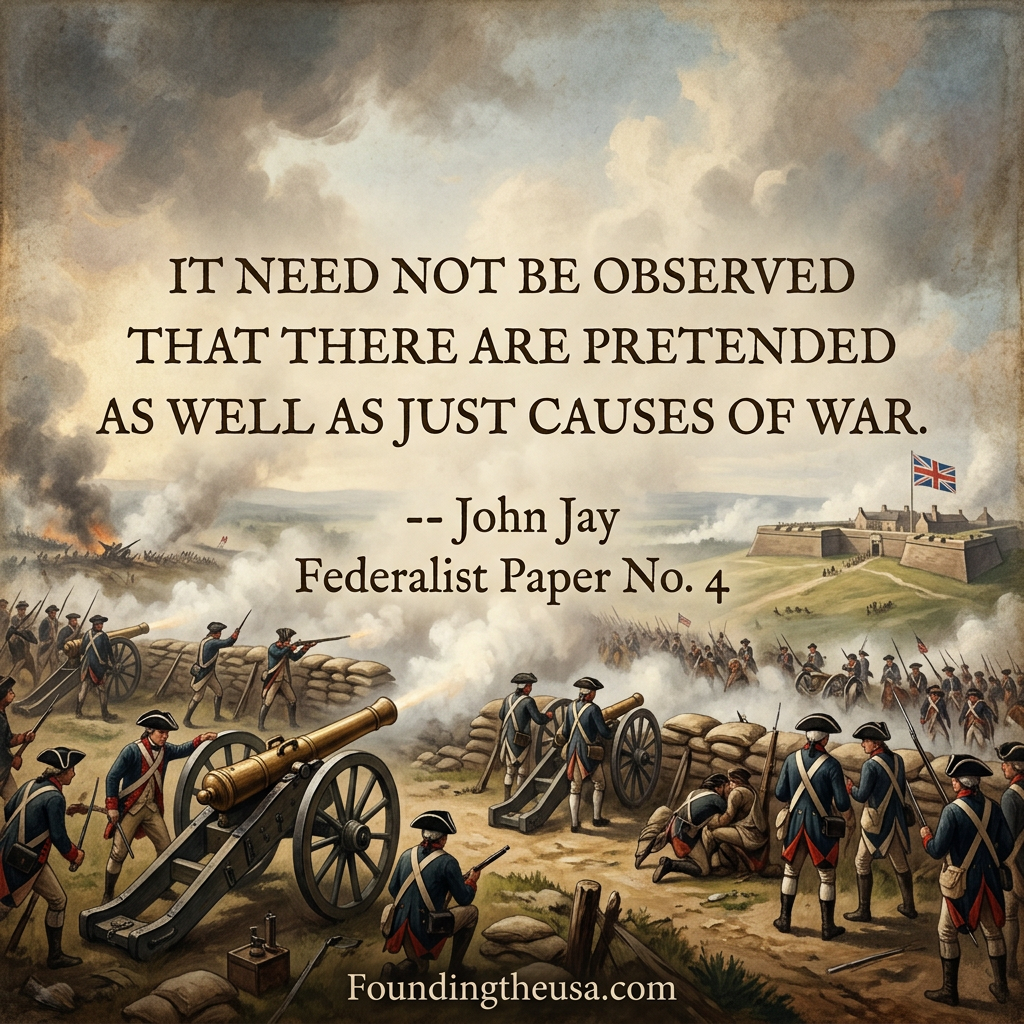
Federalist No. 4 was written by John Jay under the name Publius and continues his argument that the United States would be safer and stronger under one Union than as separate confederacies or independent governments. In this essay, Jay warns that foreign nations do not always act justly, and that a divided America would invite rivalry, pressure, and danger.
This paper builds directly on Federalist No. 2 and Federalist No. 3. Jay’s point is that foreign powers act out of interest, ambition, and opportunity. If America is divided, outside nations will find it easier to restrict American commerce, exploit regional weakness, and stir up conflict. Union, in his view, is one of the best defenses against that kind of pressure.
1. Not every war begins honestly
“It need not be observed that there are pretended as well as just causes of war.”
Jay opens with a warning that not every war starts with an honest grievance. Nations can invent excuses, dress up ambition in noble language, or act from self-interest while pretending to serve justice. His point is simple: America cannot afford to assume that foreign nations will always act fairly.
2. Nations fight when profit is possible
“Nations in general will make war whenever they have a prospect of getting anything by it.”
This is one of the bluntest and strongest lines in the essay. Jay rejects the comforting idea that nations naturally choose peace because peace is morally better. If there is something to gain, many governments will be willing to fight for it. That is classic cold-eyed Federalist realism.
3. Foreign nations will not help America grow stronger
“It is more their interest, and will be more their policy, to restrain than to promote it.”
Here Jay is talking about American trade and navigation. He argues that rival nations will not happily support the growth of American commerce if that growth weakens their own position. Foreign policy follows interest, not affection. That was true then, and frankly it still is.
4. Real-world examples matter
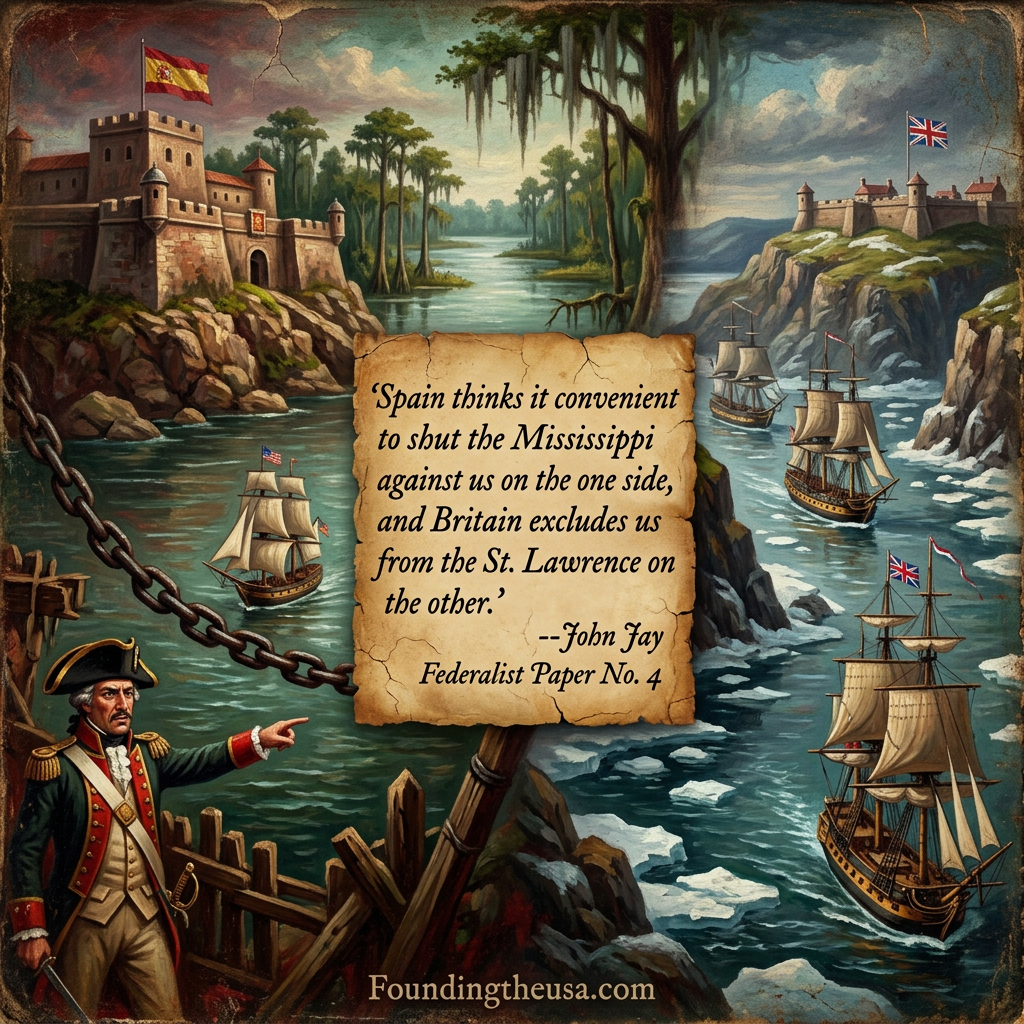
“Spain thinks it convenient to shut the Mississippi against us on the one side, and Britain excludes us from the St. Lawrence on the other.”
This quote grounds Jay’s argument in specific examples. He is reminding readers that foreign powers are already acting in ways that limit American opportunity and influence. Disunion would make that pressure easier, not harder.
5. Foreign suspicion grows slowly
“Jealousies and uneasinesses may gradually slide into the minds and cabinets of other nations…”
Jay is warning that hostility does not always arrive all at once. It often begins as suspicion, uneasiness, rivalry, or strategic concern. Over time, those attitudes harden into policy. A growing America would not automatically be welcomed with open arms.
6. Union discourages war
“They consider union and a good national government as necessary to put and keep them in such a situation as, instead of inviting war, will tend to repress and discourage it.”
This is one of the core statements of the essay. Jay is not merely saying that a united country fights better. He is saying that a united country is less likely to invite attack in the first place. Strength can deter danger before danger turns into war.
7. One government can use the best talent
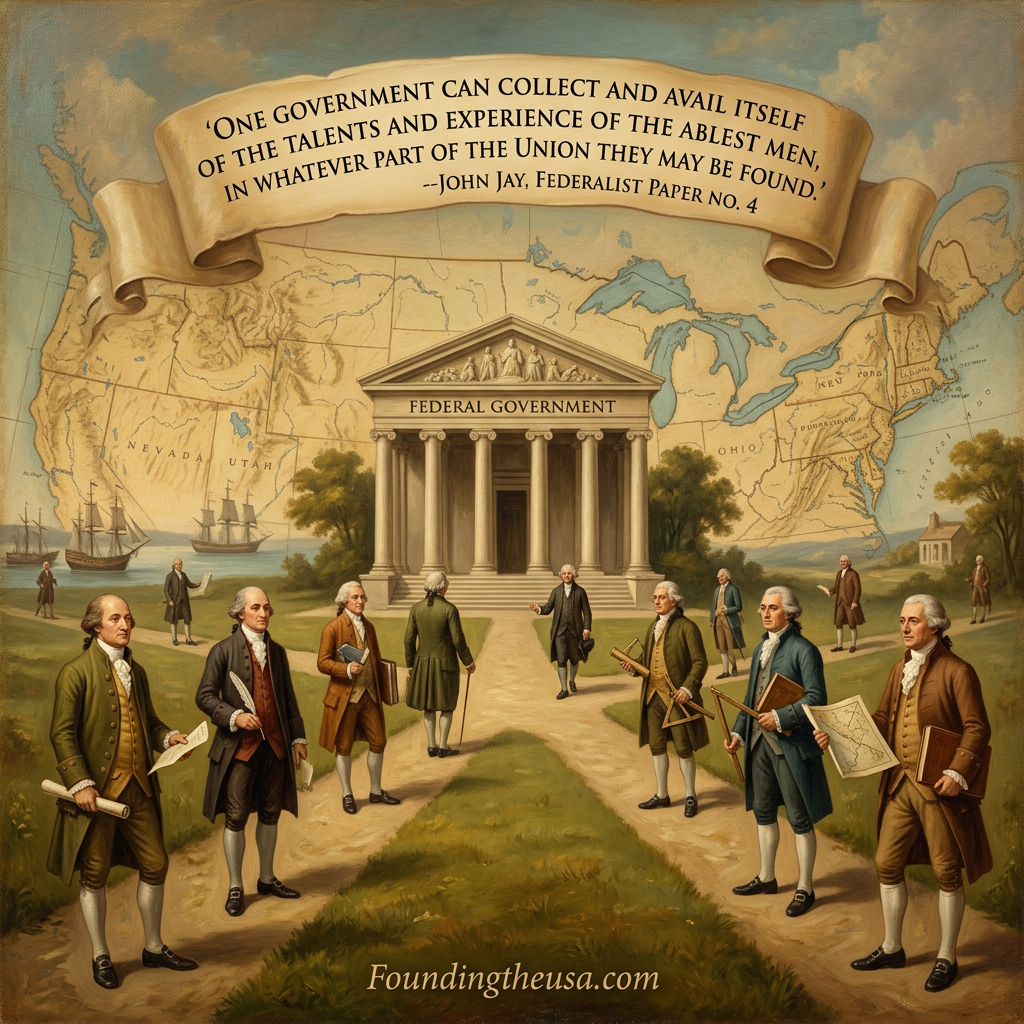
“One government can collect and avail itself of the talents and experience of the ablest men, in whatever part of the Union they may be found.”
Jay sees one national government as a practical advantage. A united government can draw on the best leadership, knowledge, and planning from across the country. Several smaller confederacies would not act with the same coherence or strength.
8. One policy is stronger than many
“It can move on uniform principles of policy.”
That line captures a major Federalist theme. A single nation can pursue one foreign policy, one defense policy, and one general strategy. Several confederacies would almost certainly pull in different directions, and foreign powers would take advantage of that confusion.
9. The strength of the whole can defend a part
“It can apply the resources and power of the whole to the defense of any particular part…”
Jay argues that a national government can defend any state more effectively than disconnected governments can defend one another. A united country can bring the strength of the whole wherever danger appears. Disunion scatters that strength.
10. Division leads to weakness
“How soon they would each dwindle into comparative insignificance.”
Jay says this while imagining what would happen if a major power were broken into smaller governments. Then he applies the same lesson to America. Divided powers shrink. United powers endure. That is one of the sharpest warnings in the essay.
11. Would separate governments really help each other?
“Would the others fly to its succor, and spend their blood and money in its defense?”
Jay asks whether separate American governments would truly rush to defend one another in a crisis. He is skeptical, and for good reason. Rivalry, jealousy, and self-interest could easily weaken mutual support. That is one more reason he believes union is essential.
12. Disunion breeds rivalry
“They are more likely to annoy than assist each other.”
This is one of the most memorable lines in Federalist No. 4. Jay argues that neighboring governments often compete instead of cooperate. If America were divided, separate confederacies might become sources of friction and weakness rather than mutual protection.
This paper is less theatrical than Hamilton at his most quotable, but it still has very strong lines and a very modern message: foreign policy is not run on goodwill. It is run on interest, power, and opportunity.
Related Links
- Federalist No. 4 Full Text
- Federalist Papers
- John Jay
- Federalist No. 3
- Articles of Confederation
- United States Constitution