





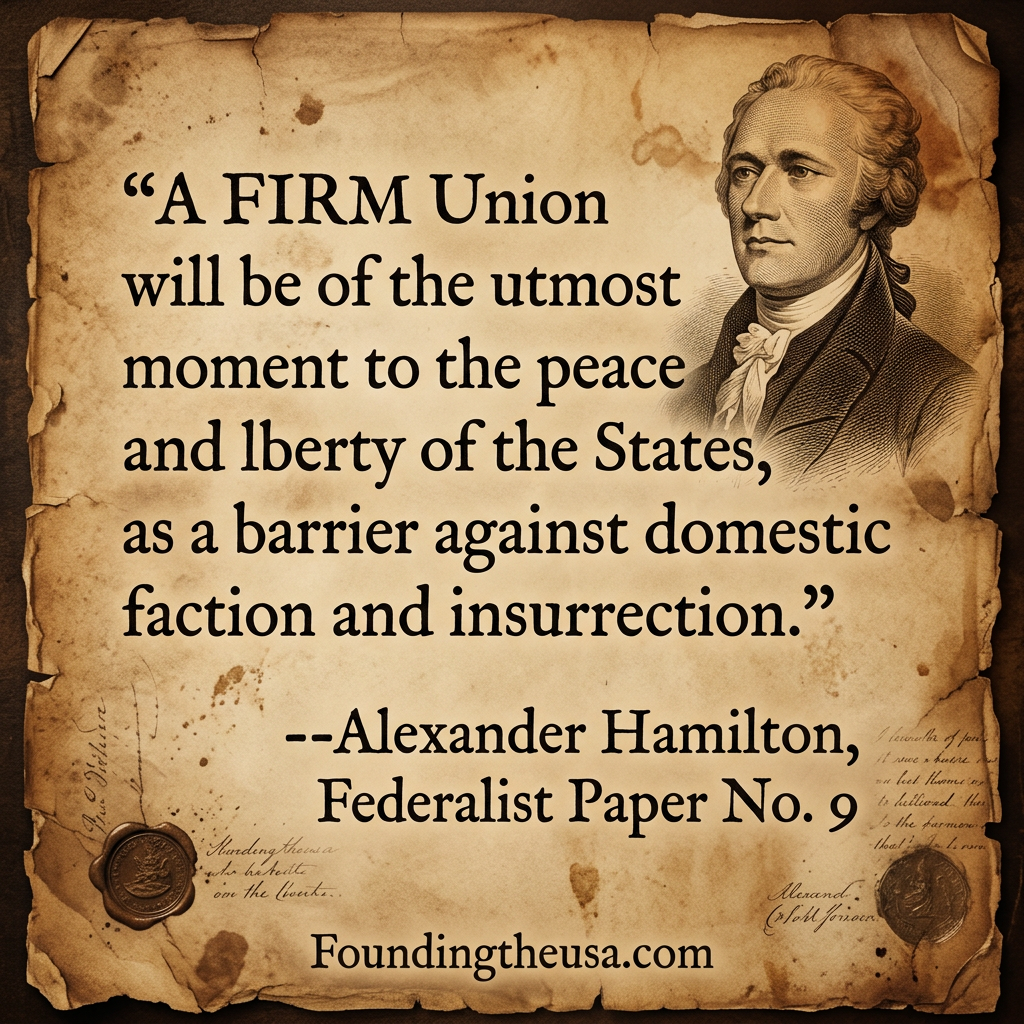
Federalist No. 9 was written by Alexander Hamilton under the name Publius and published on November 21, 1787. In this essay, Hamilton argues that a strong Union under the proposed Constitution can protect the states against domestic faction and insurrection while preserving the benefits of republican government. This is one of the first Federalist papers where Hamilton really starts pivoting from “disunion is dangerous” to “the Constitution is a better answer.”
This paper matters because Hamilton says something big: the ancient republics failed, but modern political science has improved. He argues that constitutional tools like separation of powers, checks and balances, representation, and independent courts can help preserve liberty while reducing the instability that ruined older republics.
1. Union protects peace and liberty
“A FIRM Union will be of the utmost moment to the peace and liberty of the States, as a barrier against domestic faction and insurrection.”
That is the opening thesis of the paper and one of its strongest lines. Hamilton is arguing that union is not just useful for defense against foreign enemies. It also helps keep internal unrest from tearing the states apart.
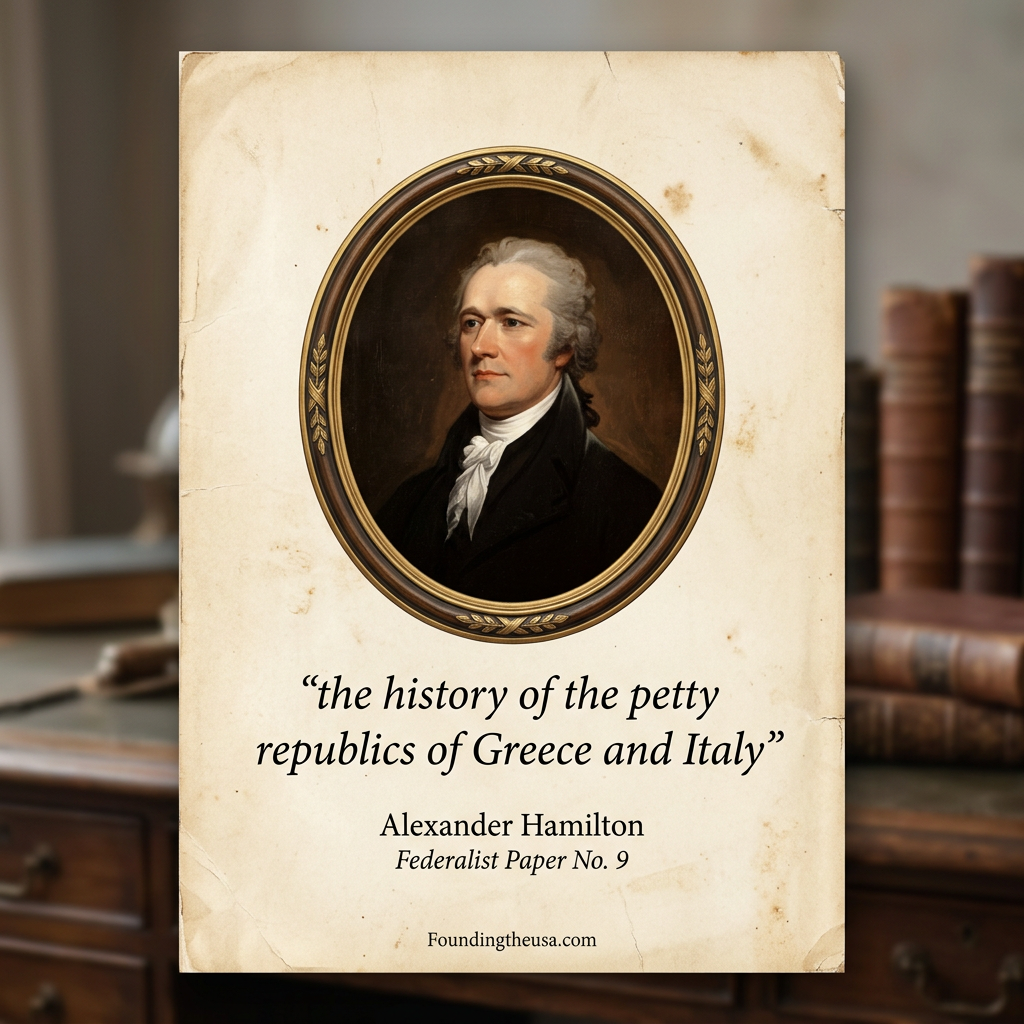
2. Ancient republics were a mess
“the history of the petty republics of Greece and Italy”
Hamilton points to the ancient world as a warning. He wants readers to see that small republics were often unstable, faction-ridden, and prone to swinging between chaos and oppression.
3. Perpetual vibration between anarchy and tyranny
“a state of perpetual vibration between the extremes of tyranny and anarchy.”
This is one of the best lines in the essay. Hamilton is describing the political instability of ancient republics as a kind of violent oscillation: not steady liberty, but constant movement between disorder and domination. Strong quote. Strong meme potential.
4. Short-lived calm, then storm again
“short-lived contrast to the furious storms that are to succeed.”
Hamilton is saying that temporary peace means very little in a badly structured republic. The calm is only intermission before the next outbreak.
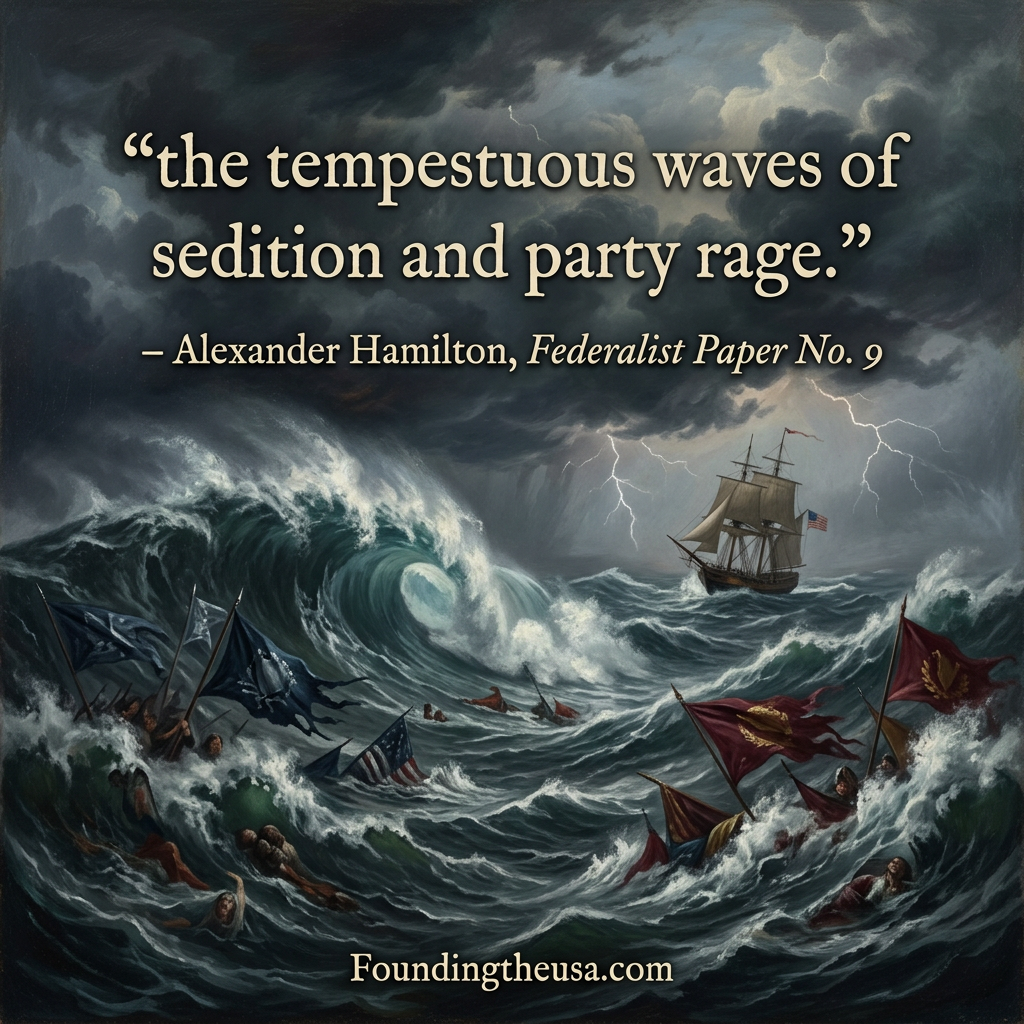
5. Sedition and party rage
“the tempestuous waves of sedition and party rage.”
That phrase is vintage Hamilton — dramatic, visual, and still relevant. He sees faction not as a mild annoyance, but as something capable of wrecking whole governments.
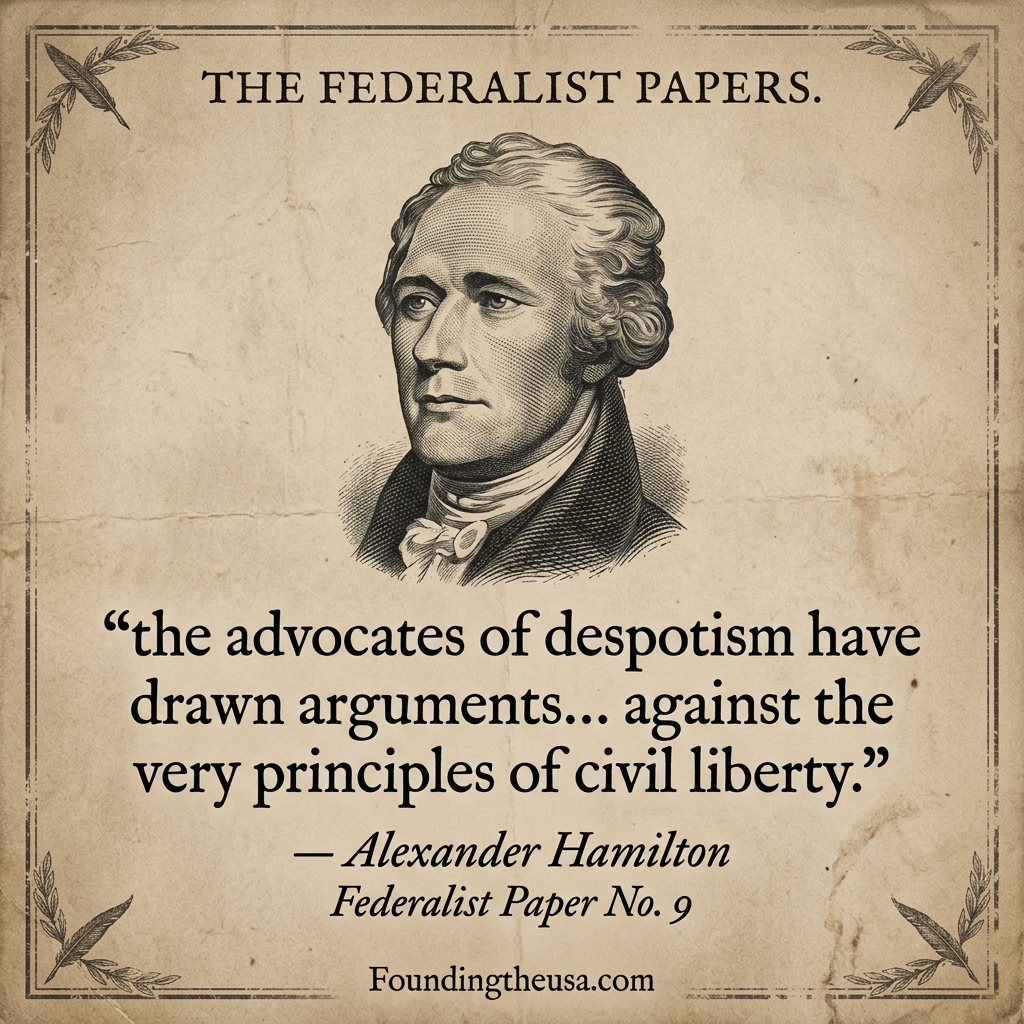
6. Enemies of liberty used those failures as ammunition
“the advocates of despotism have drawn arguments… against the very principles of civil liberty.”
This is an important line. Hamilton is saying that every failed republic gives ammunition to the enemies of freedom. If republics collapse into chaos, the authoritarians get to point and smirk.
7. Political science has improved
“The science of politics, however, like most other sciences, has received great improvement.”
This is one of the signature ideas in Federalist No. 9. Hamilton is arguing that government design has advanced. Americans are not doomed to repeat the exact failures of Greece and Italy because they have access to better institutional tools.
8. Distinct departments
“The regular distribution of power into distinct departments”
A compact statement of separation of powers. Hamilton is presenting this as one of the modern improvements that can make republican government more stable and less self-destructive.
9. Checks and balances
“the introduction of legislative balances and checks”
Another core constitutional idea. Hamilton argues that balancing institutions against one another is not a bug. It is one of the ways liberty is protected from faction and concentration of power.
10. Judges during good behavior
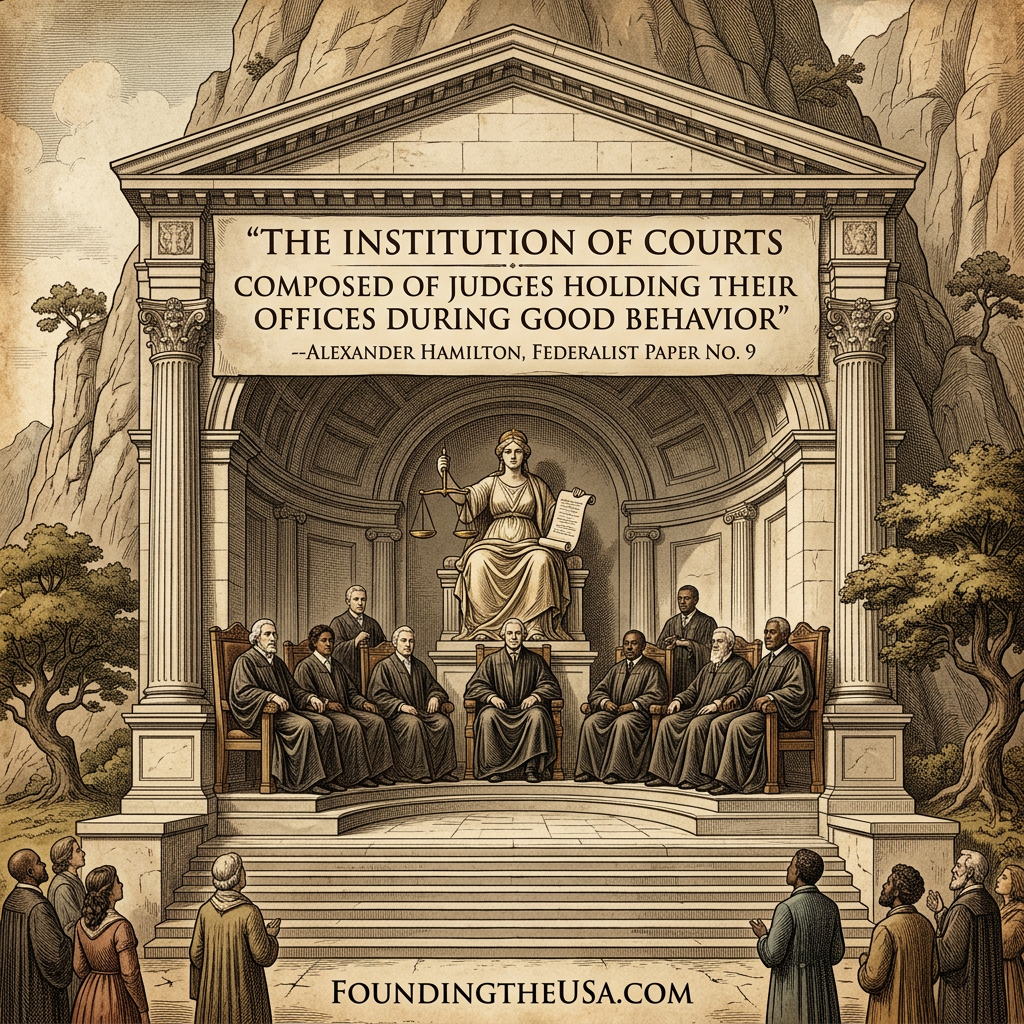
“the institution of courts composed of judges holding their offices during good behavior”
That line matters because it points straight toward judicial independence. Hamilton is listing the structural features that, in his view, make modern republican government superior to the ancient kind.
11. Representation as an improvement
“the representation of the people in the legislature by deputies of their own election”
Hamilton is emphasizing representative government as a major modern achievement. The people do not have to rule in a chaotic mass meeting for liberty to exist. Representation can channel popular government more safely and effectively.
12. Enlargement of the orbit
“the ENLARGEMENT of the ORBIT within which such systems are to revolve”
This is one of the defining phrases in the essay. Hamilton is arguing that a larger republic or confederated republic can actually be an advantage, not a fatal weakness. It is a direct answer to the objection that republics must remain tiny to survive.
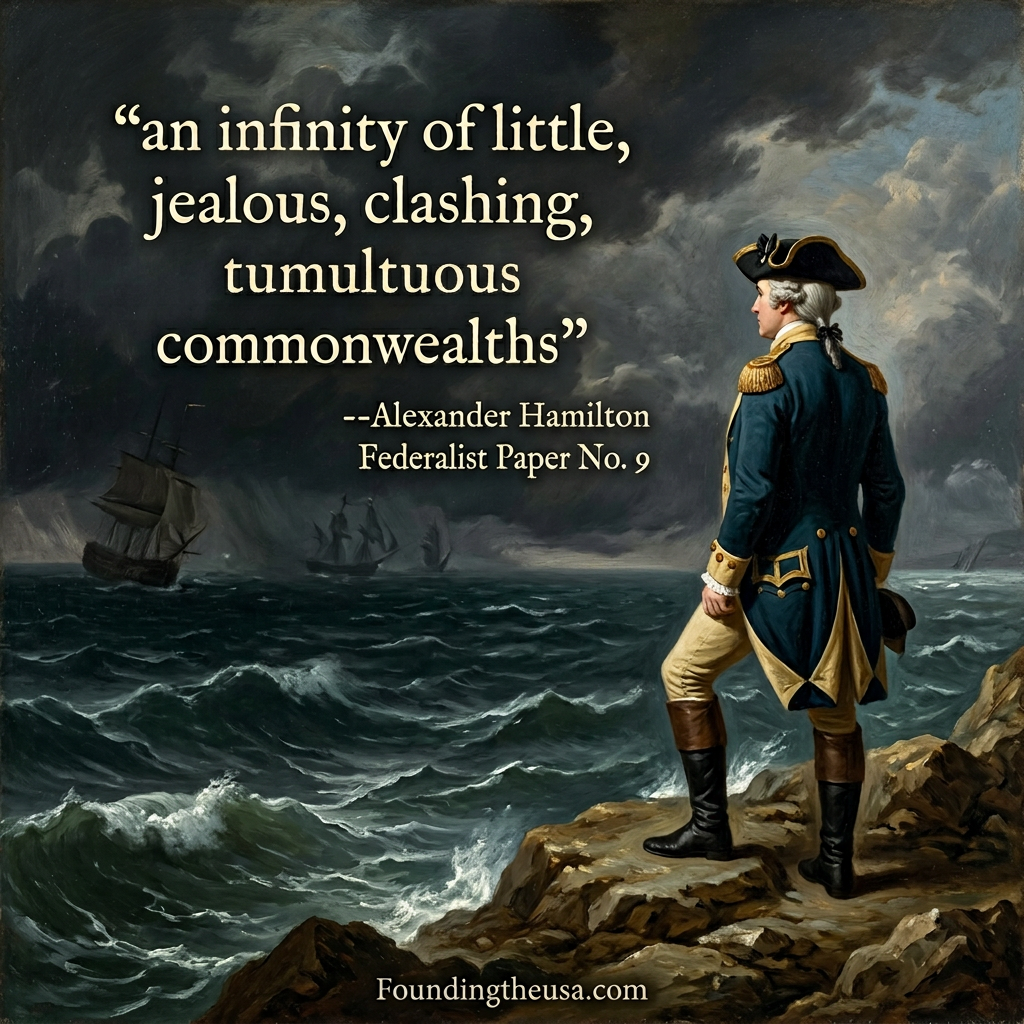
13. Little jealous commonwealths
“an infinity of little, jealous, clashing, tumultuous commonwealths”
That is one of the best Hamilton lines in the paper. He is mocking the idea that breaking the states into smaller pieces would preserve liberty. In his view, it would just create more petty rivalry and more chaos.
14. Wretched nurseries of unceasing discord
“the wretched nurseries of unceasing discord”
Another sharp line. Hamilton is saying small clashing republics do not nurture liberty. They nurture endless conflict. Great phrase for a quote image.
15. Confederate republic
“a CONFEDERATE REPUBLIC”
Hamilton leans heavily on Montesquieu here. The idea is that smaller states can join in a larger political body that preserves the internal advantages of republican government while gaining the external strength of a larger system.
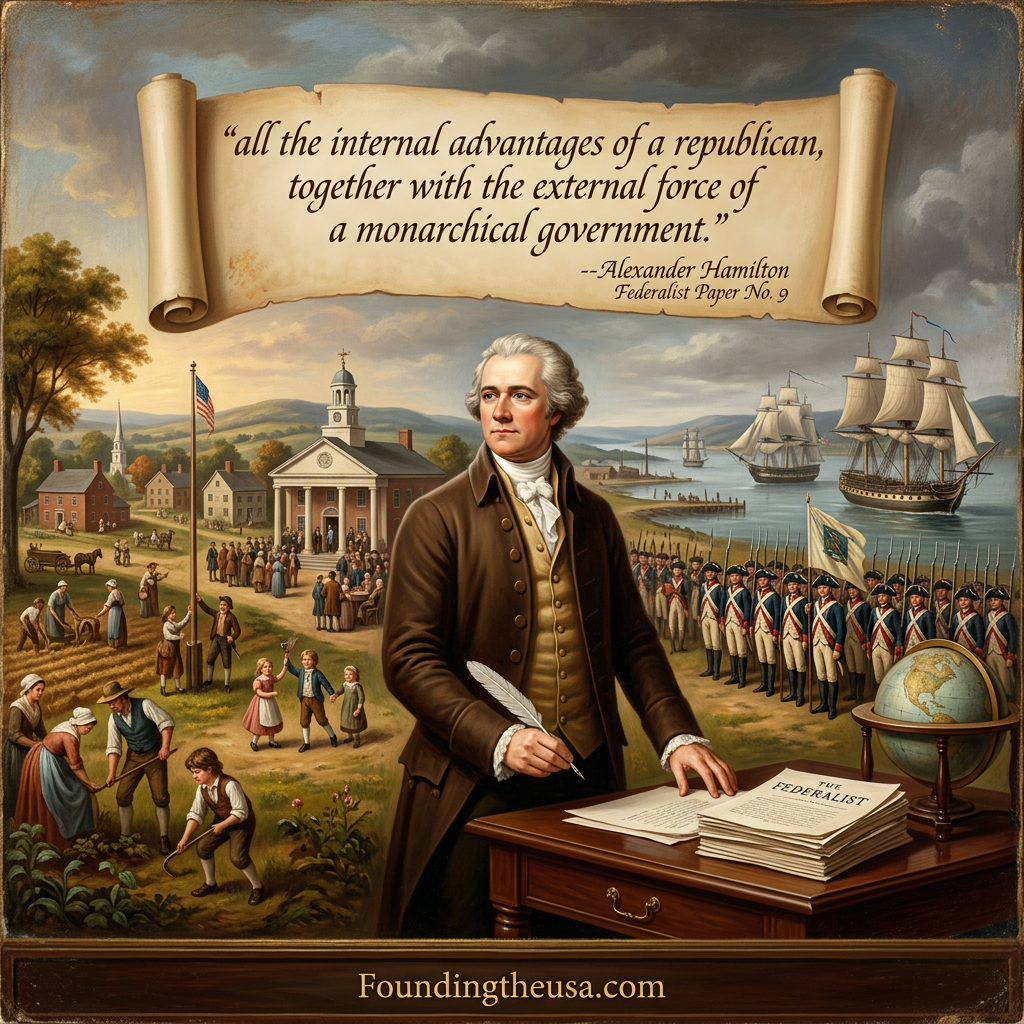
16. Internal advantages, external force
“all the internal advantages of a republican, together with the external force of a monarchical government.”
This is one of the most important lines in the paper. Hamilton, quoting Montesquieu, is saying that a confederate republic can combine liberty at home with strength abroad. That is basically the constitutional promise in miniature.
17. If one part goes bad, the others can resist
“Should abuses creep into one part, they are reformed by those that remain sound.”
This is one of the most attractive ideas in the essay. Hamilton argues that a confederated system has a self-correcting feature: if one part becomes corrupt or unstable, the others can help contain or repair the damage.
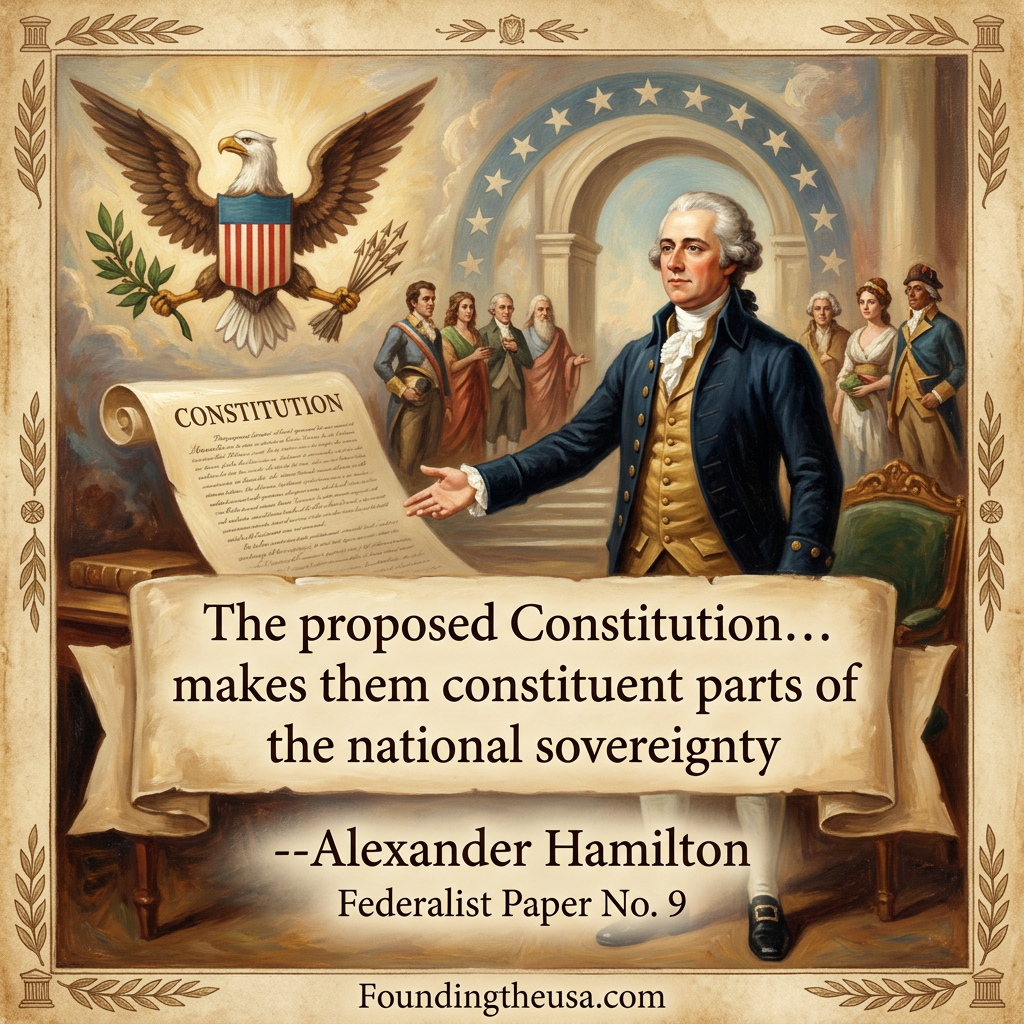
18. The proposed Constitution preserves the states
“The proposed Constitution… makes them constituent parts of the national sovereignty”
This is a key clarifying point. Hamilton insists that the Constitution does not abolish the states. Instead, it incorporates them into the federal structure, especially through representation in the Senate.
Why Federalist No. 9 Works for Highlights
Federalist No. 9 works very well as a highlights page because it is packed with big constitutional ideas in memorable language. It has warnings about anarchy and faction, but it also has something more positive: a real defense of modern constitutional design. Hamilton is saying liberty does not have to choose between chaos and monarchy if government is structured wisely.
This essay is also one of the first places where the Federalist Papers start sounding like a coherent defense of the Constitution as a better political machine, not just a reaction against disunion. That makes it an important bridge paper.
Related Links
- Federalist No. 9 Full Text
- Federalist Papers
- Alexander Hamilton
- Federalist No. 8
- Articles of Confederation
- United States Constitution