Federalist No. 25 was written by Alexander Hamilton under the name Publius. In this essay, Hamilton continues defending the Constitution’s military powers by arguing that the common defense must remain national, not be pushed back onto the individual states. His point is that if the danger is common, the responsibility and the means of meeting it must also be common.
This paper matters because Hamilton presses two connected arguments hard: first, separate state military establishments would be unfair, destabilizing, and dangerous to the Union; second, rigid constitutional bans on peacetime military preparation would leave the country stupidly exposed until after danger had already arrived.
1. Turning common defense over to the states would invert the whole Union
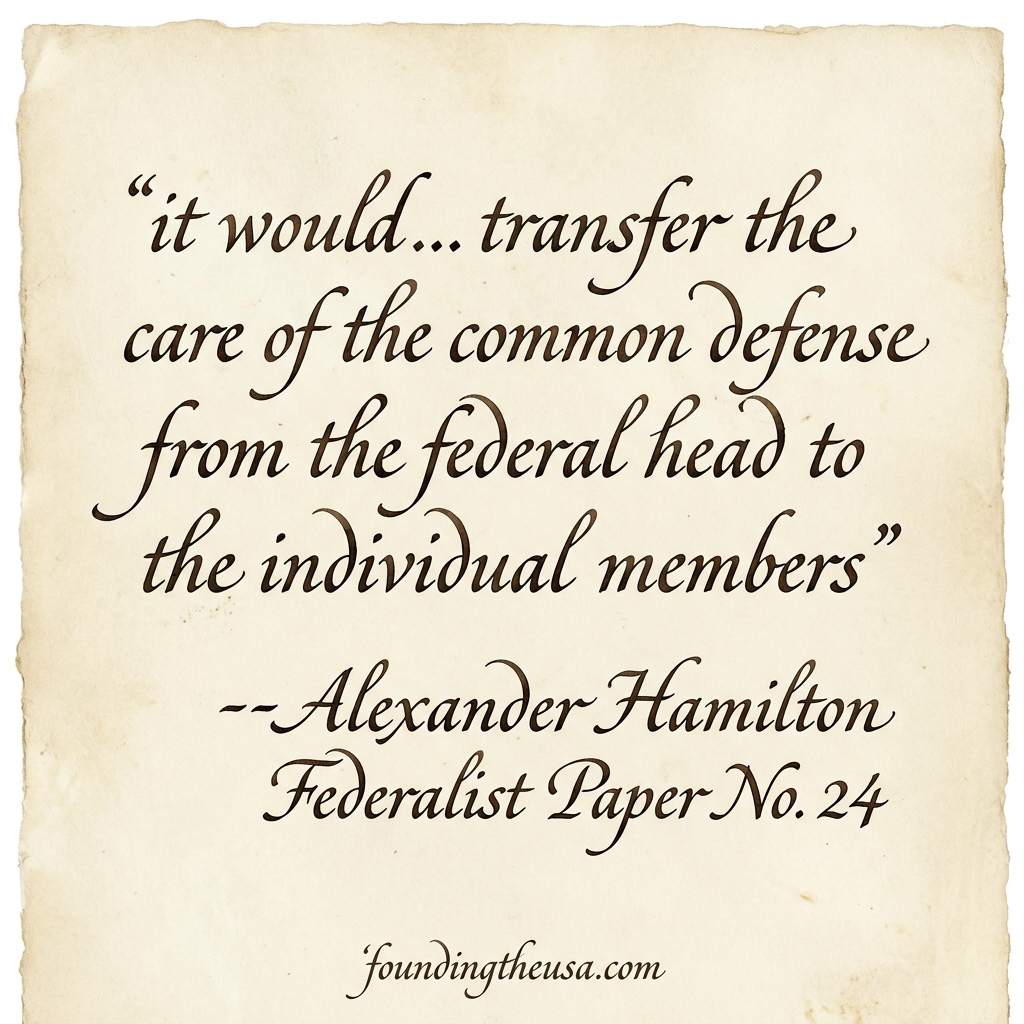
“it would… transfer the care of the common defense from the federal head to the individual members”
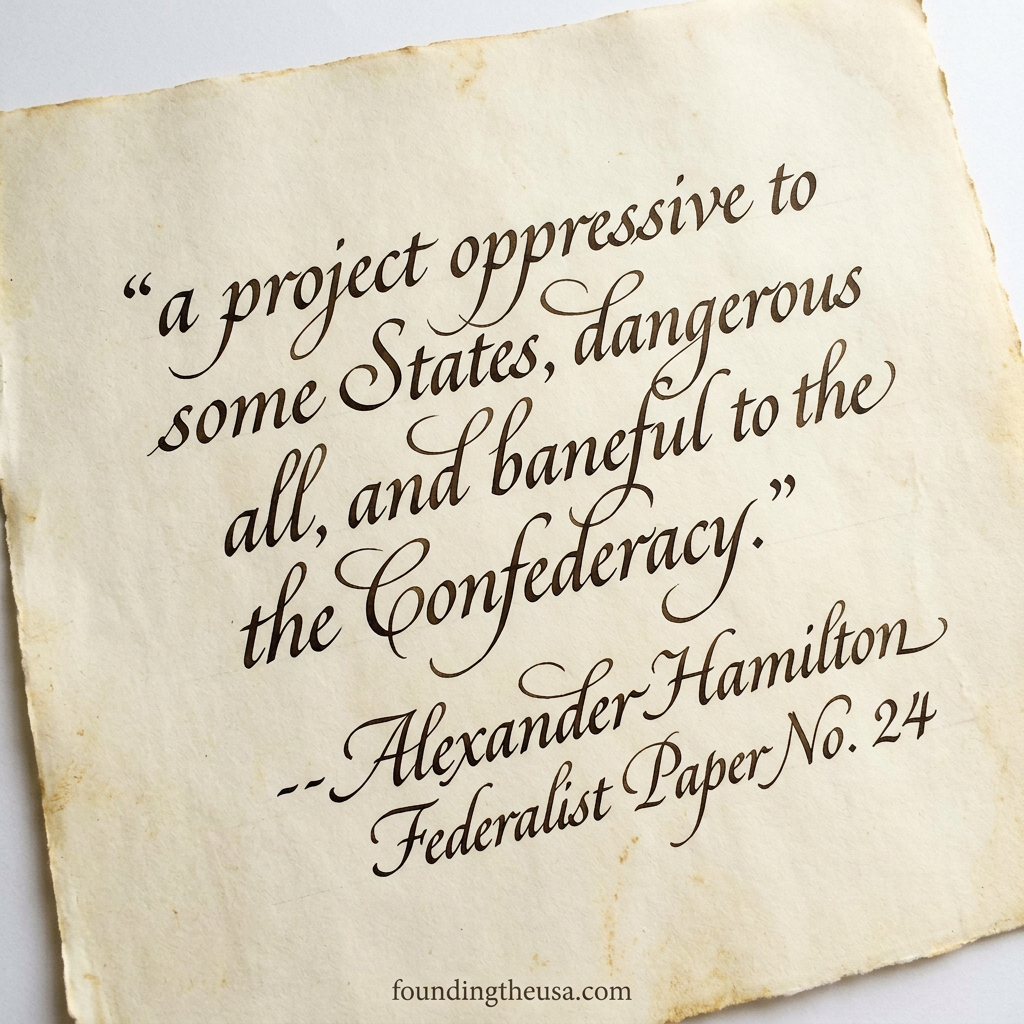
“a project oppressive to some States, dangerous to all, and baneful to the Confederacy.”
Hamilton opens with a broad punch. He says this is not some minor administrative tweak. It would flip the whole logic of union upside down.
2. The danger is common, so the councils and treasury should be common too
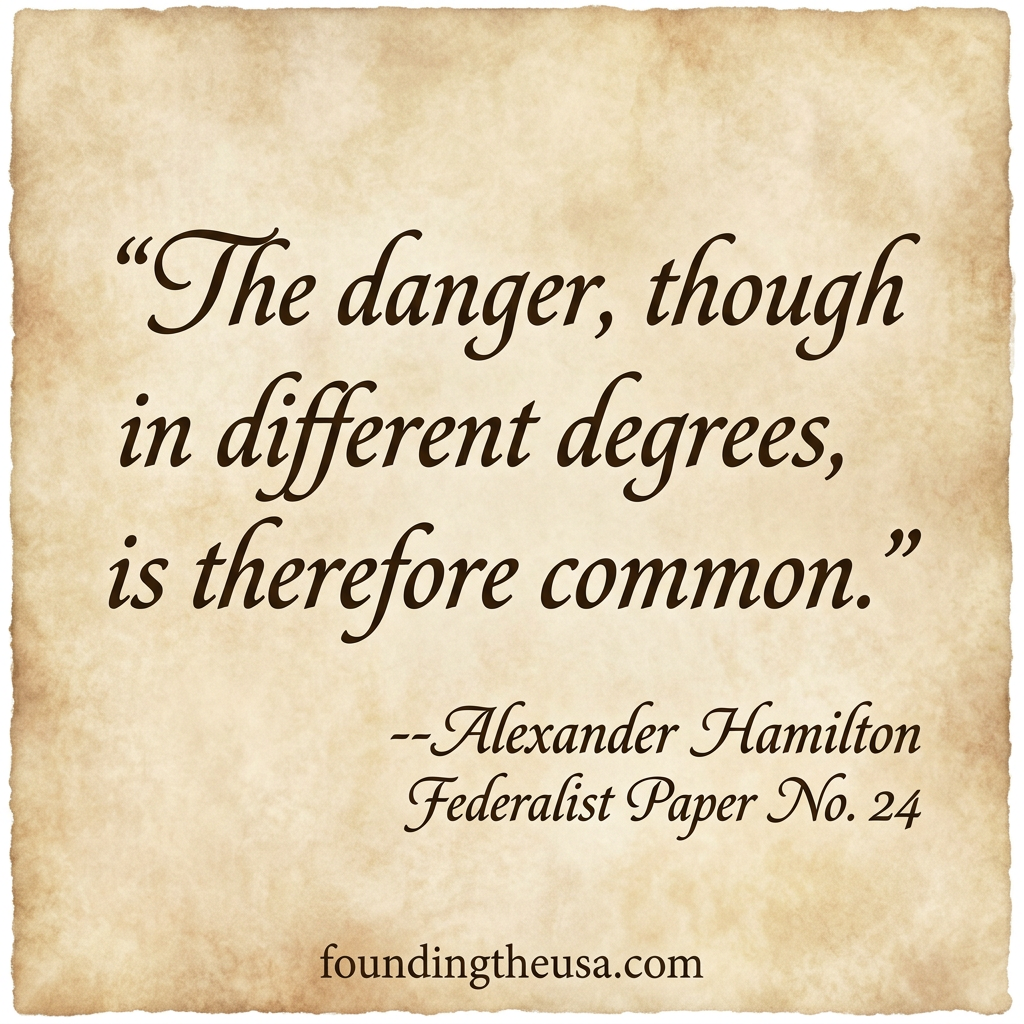
“The danger, though in different degrees, is therefore common.”
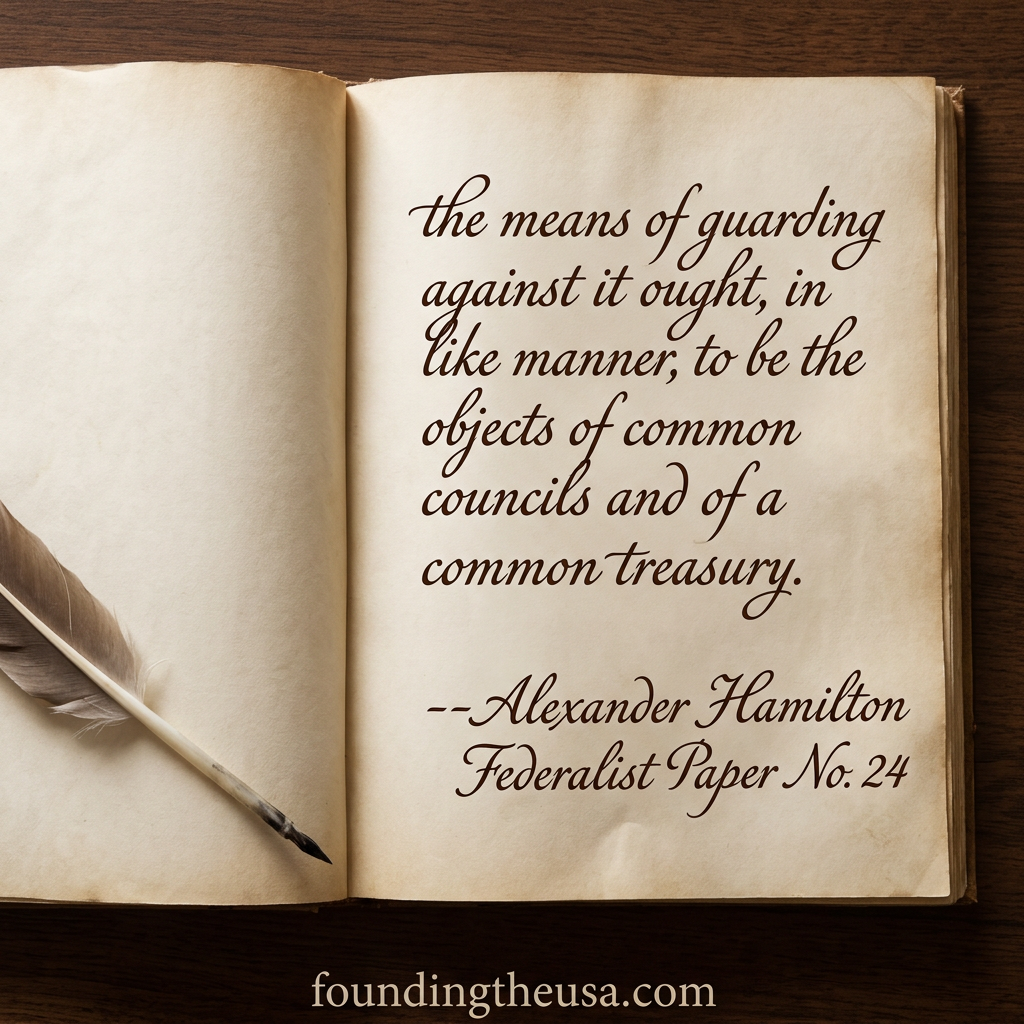
“the means of guarding against it ought, in like manner, to be the objects of common councils and of a common treasury.”
That is one of the load-bearing passages in the paper. Hamilton argues that when the threat surrounds the whole Union, it makes no sense to pretend defense is just a local problem.
3. Frontier states would be crushed by unequal burdens
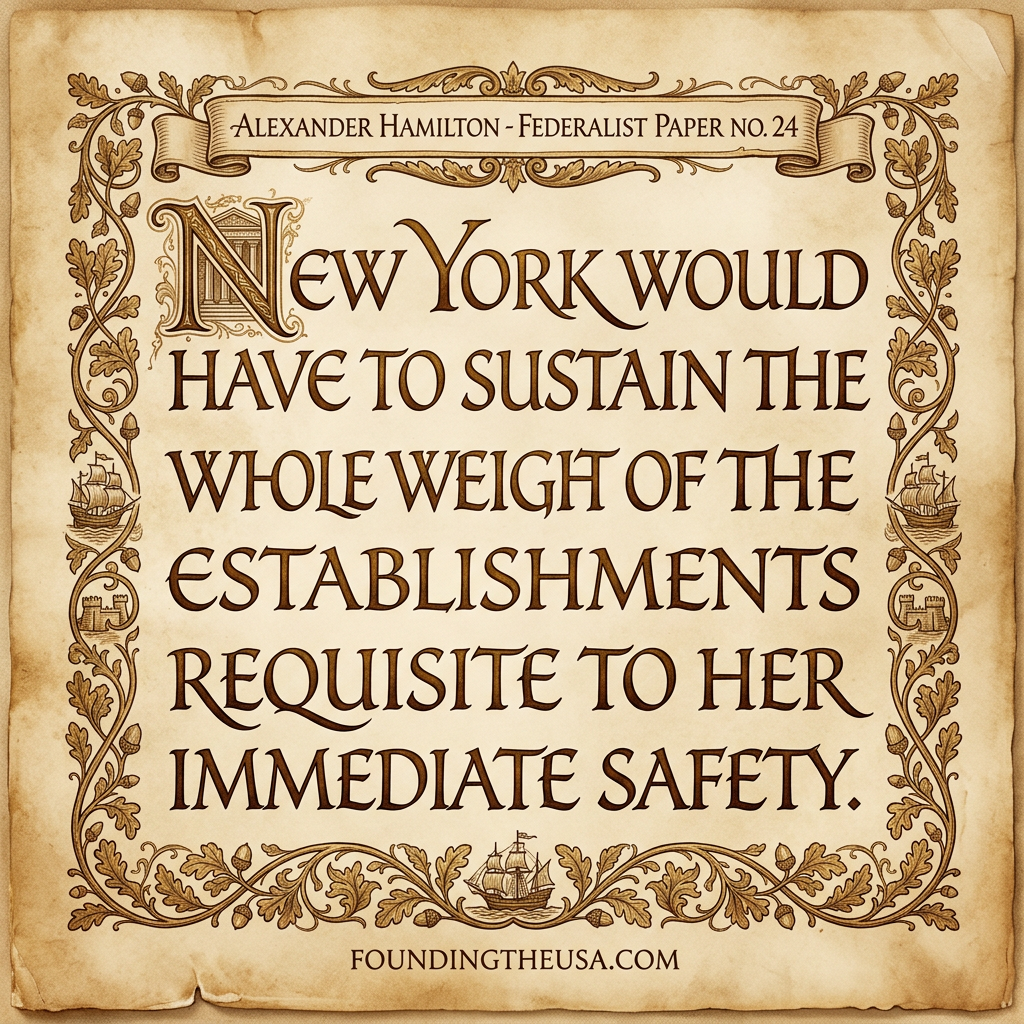
“New York would have to sustain the whole weight of the establishments requisite to her immediate safety”
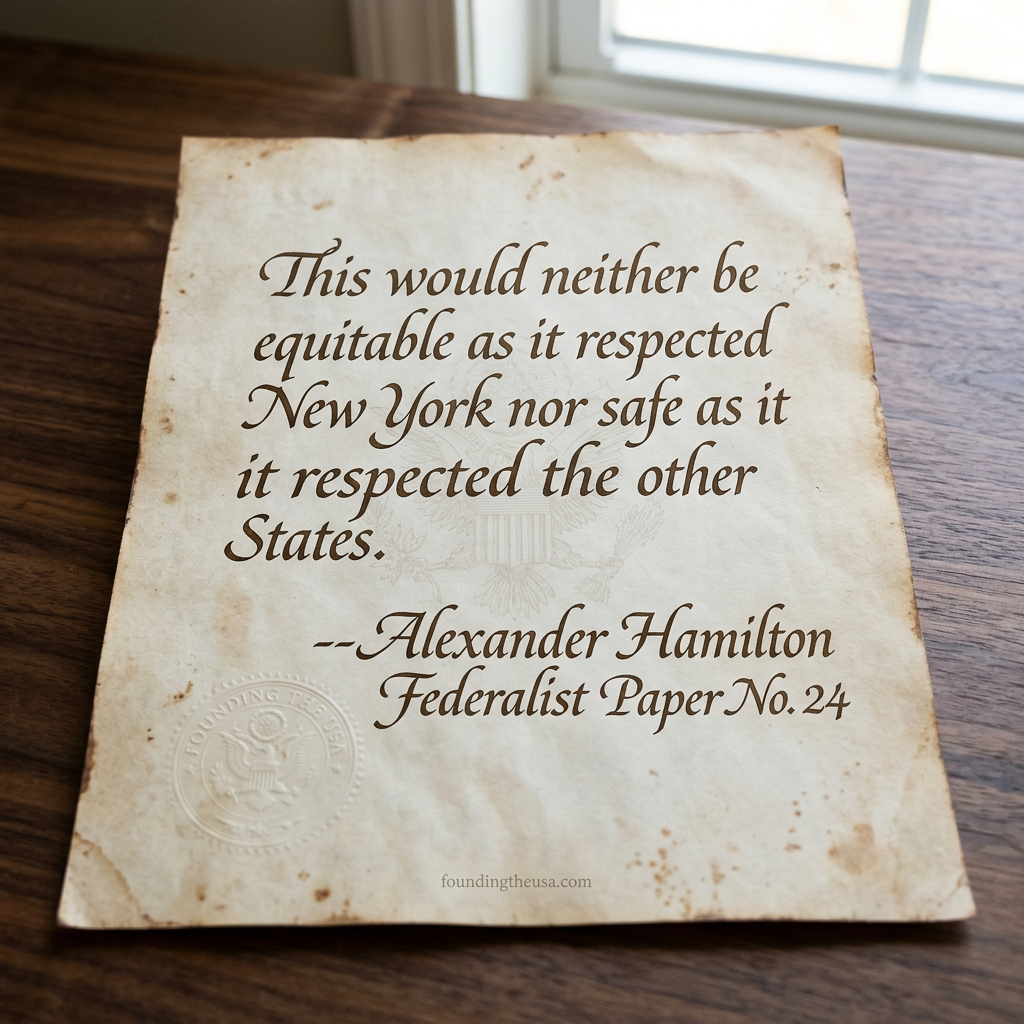
“This would neither be equitable as it respected New York nor safe as it respected the other States.”
Hamilton says separate defense systems would be unfair from the start. The states most exposed would pay the highest price for protecting everyone.
4. The security of all would depend on the weakness of a part
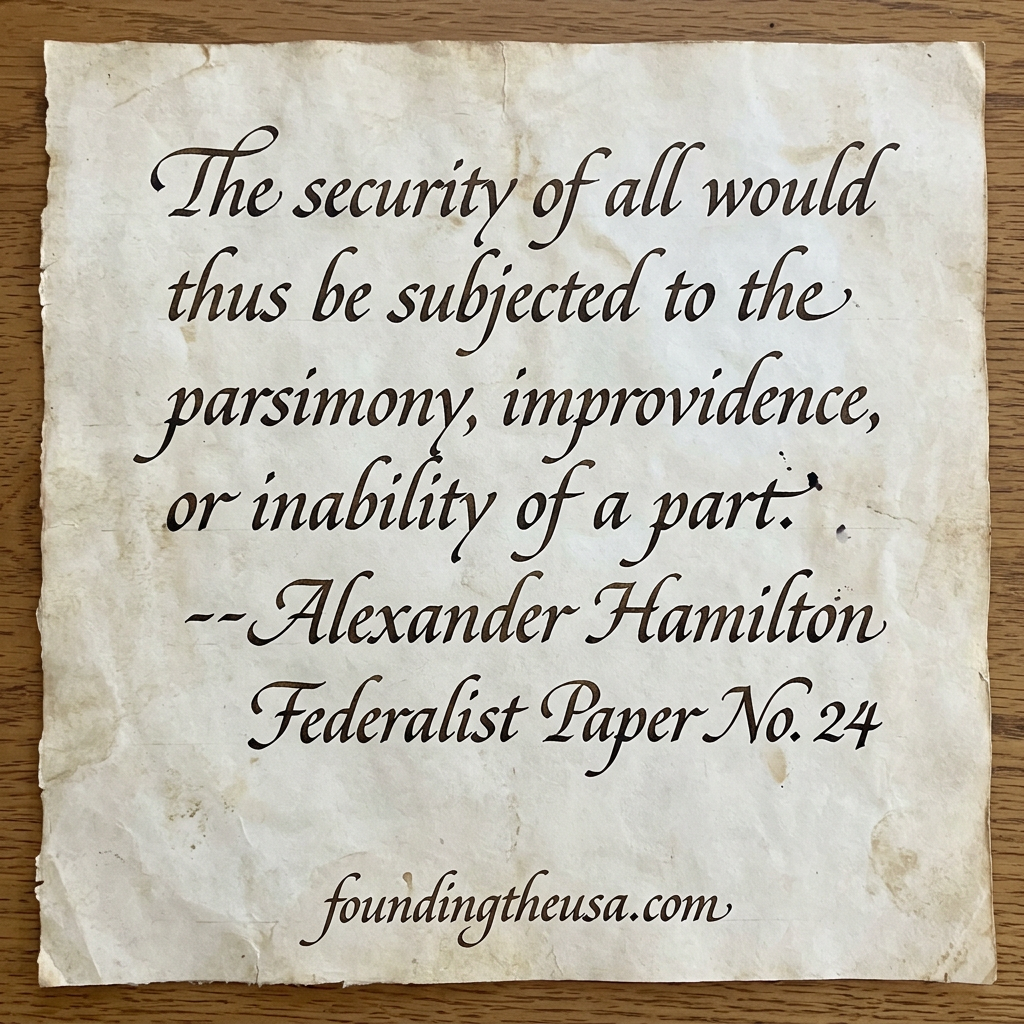
“The security of all would thus be subjected to the parsimony, improvidence, or inability of a part.”
Excellent line. If defense is left to the exposed states alone, the whole Union becomes hostage to their limited resources or bad decisions.
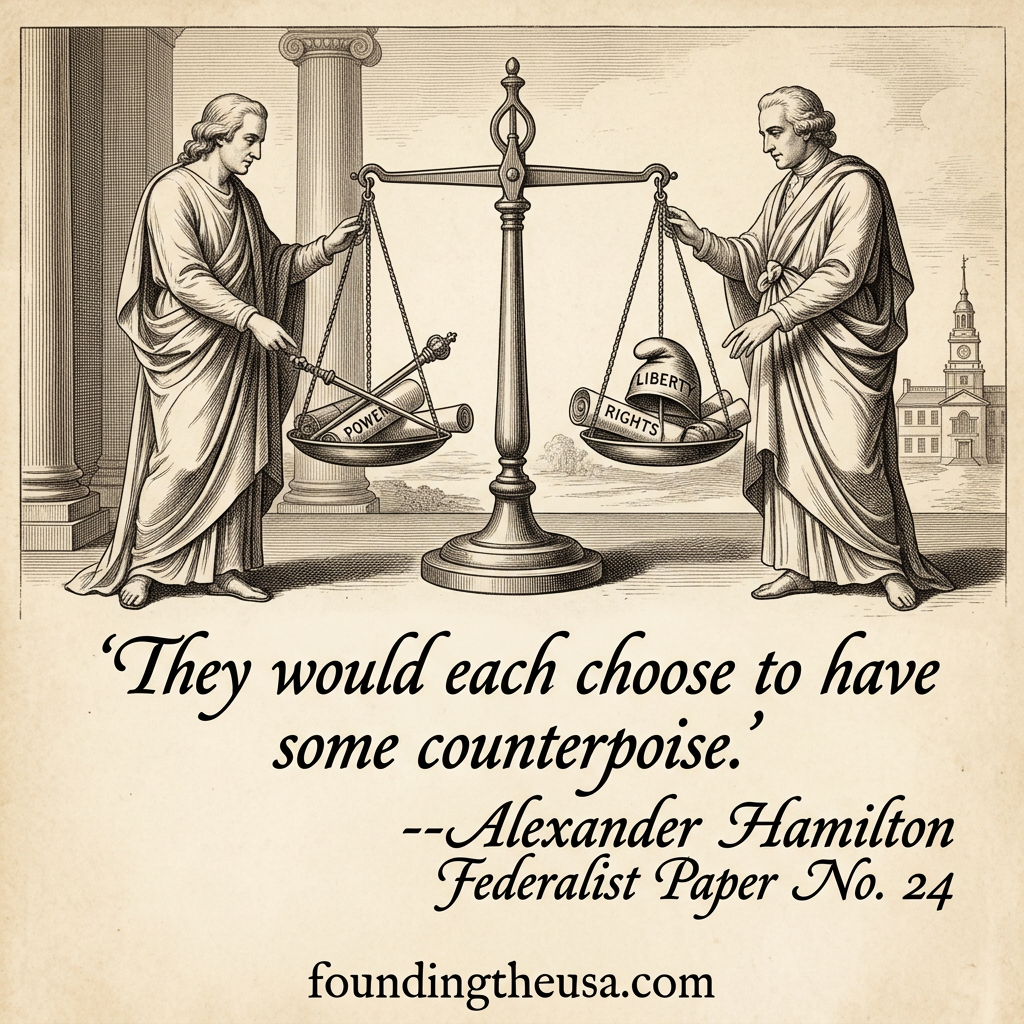
5. Separate state forces would breed jealousy and rivalry
“the other States would quickly take the alarm”
“They would each choose to have some counterpoise”
Hamilton says once a few states start holding most of the military strength, the others will not sit there smiling politely. They will arm in response.
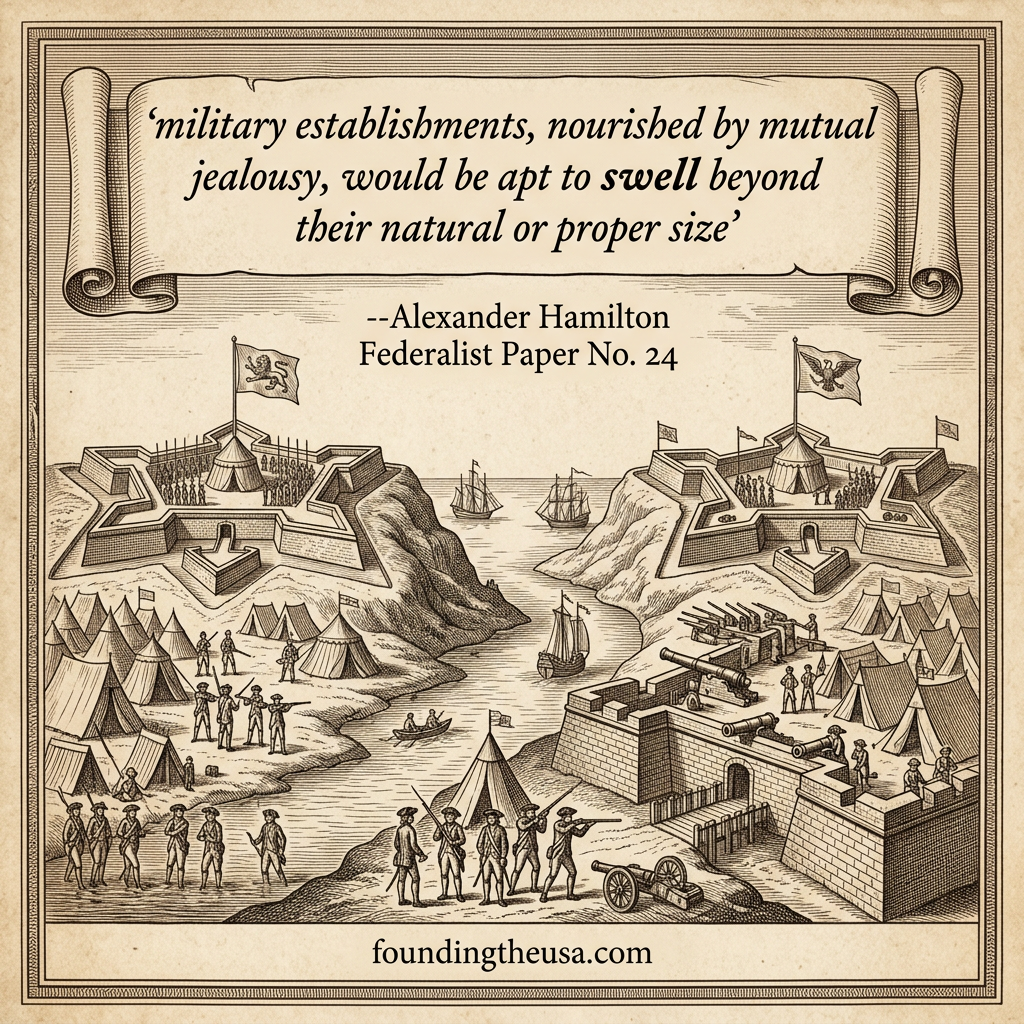
6. Military establishments would then swell beyond what is proper
“military establishments, nourished by mutual jealousy, would be apt to swell beyond their natural or proper size”
That is one of the best practical points in the essay. Hamilton argues that fragmented military power does not reduce militarization. It can actually increase it.
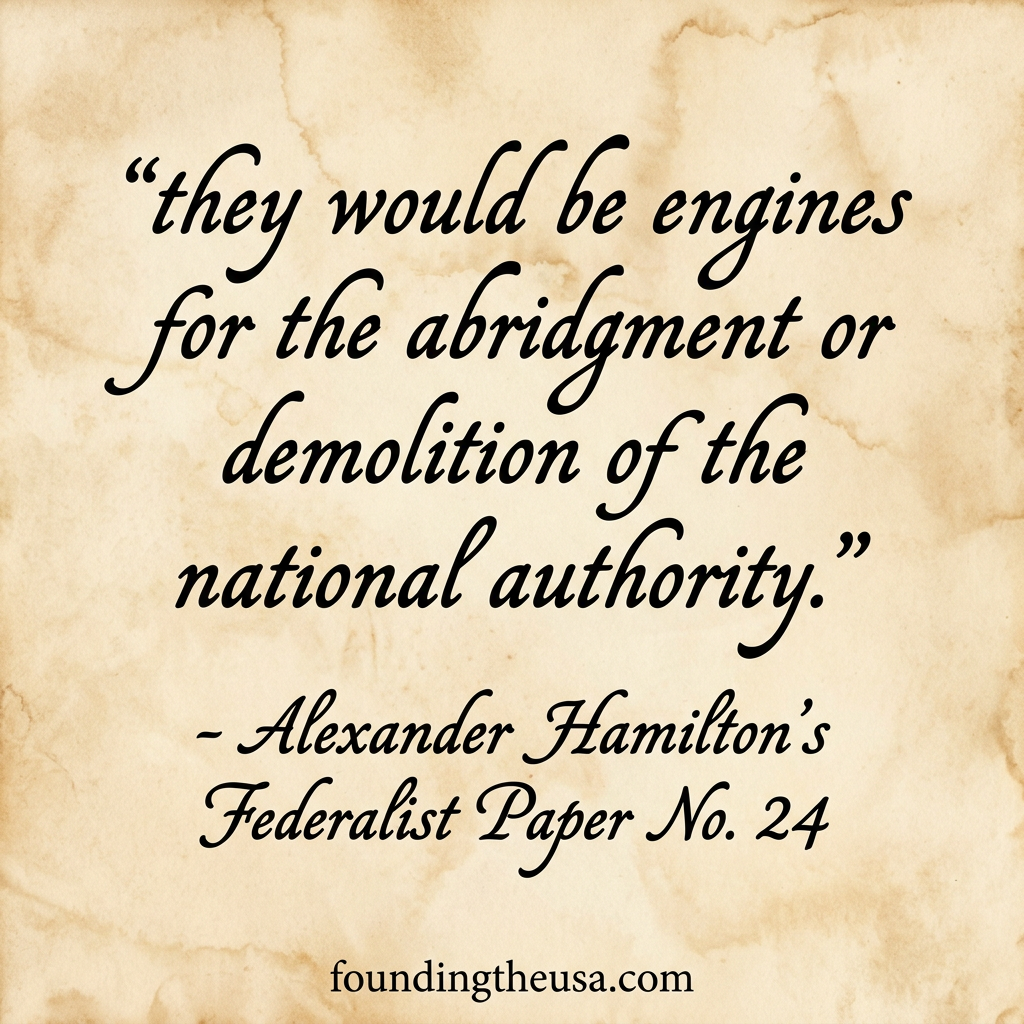
7. Separate state armies could become engines against the Union
“they would be engines for the abridgment or demolition of the national authority.”
That is a key warning. Hamilton says state-controlled military establishments could eventually be used not just for defense, but against federal authority itself.
8. Local governments already have natural advantages in public affection
“the people will be most apt to unite with their local government.”
This echoes Federalist No. 17. Hamilton reminds readers that in any clash between local and national power, public sympathy often flows first toward the local side.
9. An army is safer in the hands people watch with suspicion
“As far as an army may be considered as a dangerous weapon of power, it had better be in those hands of which the people are most likely to be jealous”
“the people are always most in danger when the means of injuring their rights are in the possession of those of whom they entertain the least suspicion.”
This is one of the strongest passages in the paper. Hamilton flips the usual fear. He says danger is actually greater when power sits with authorities the public trusts too casually.
10. Even the Articles recognized the danger of state-controlled military force
“the framers of the existing Confederation… have, in express terms, prohibited them from having either ships or troops, unless with the consent of Congress.”
That is a useful Hamilton move. He points out that even the Articles themselves recognized the danger of letting the states separately hold military establishments.
11. A ban on “keeping up” armies in peace would be vague and easy to evade
“it will have no precise signification”
“it will be ineffectual for the purpose intended.”
Hamilton says that if you ban keeping armies up in peacetime but still allow them to be raised, you have not solved much. You have mostly created a vague slogan.
12. Someone still has to judge whether danger continues
“Who shall judge of the continuance of the danger?”
“This must undoubtedly be submitted to the national government”
That is a sharp point. Even with a supposed restriction, someone still has to decide whether danger has passed, and that decision would still rest with government.
13. If you ban even the raising of armies in peace, the country becomes absurdly helpless
“the most extraordinary spectacle which the world has yet seen”
“a nation incapacitated by its Constitution to prepare for defense, before it was actually invaded.”
That is one of the headline lines from the paper. Hamilton says such a system would be suicidal in constitutional form.
14. We would have to wait to be hit before preparing to respond
“We must receive the blow, before we could even prepare to return it.”
Short, memorable, and very strong. Hamilton is mocking the fantasy that liberty requires forbidding all advance preparation.
15. That would leave property and liberty exposed to invaders
“We must expose our property and liberty to the mercy of foreign invaders”
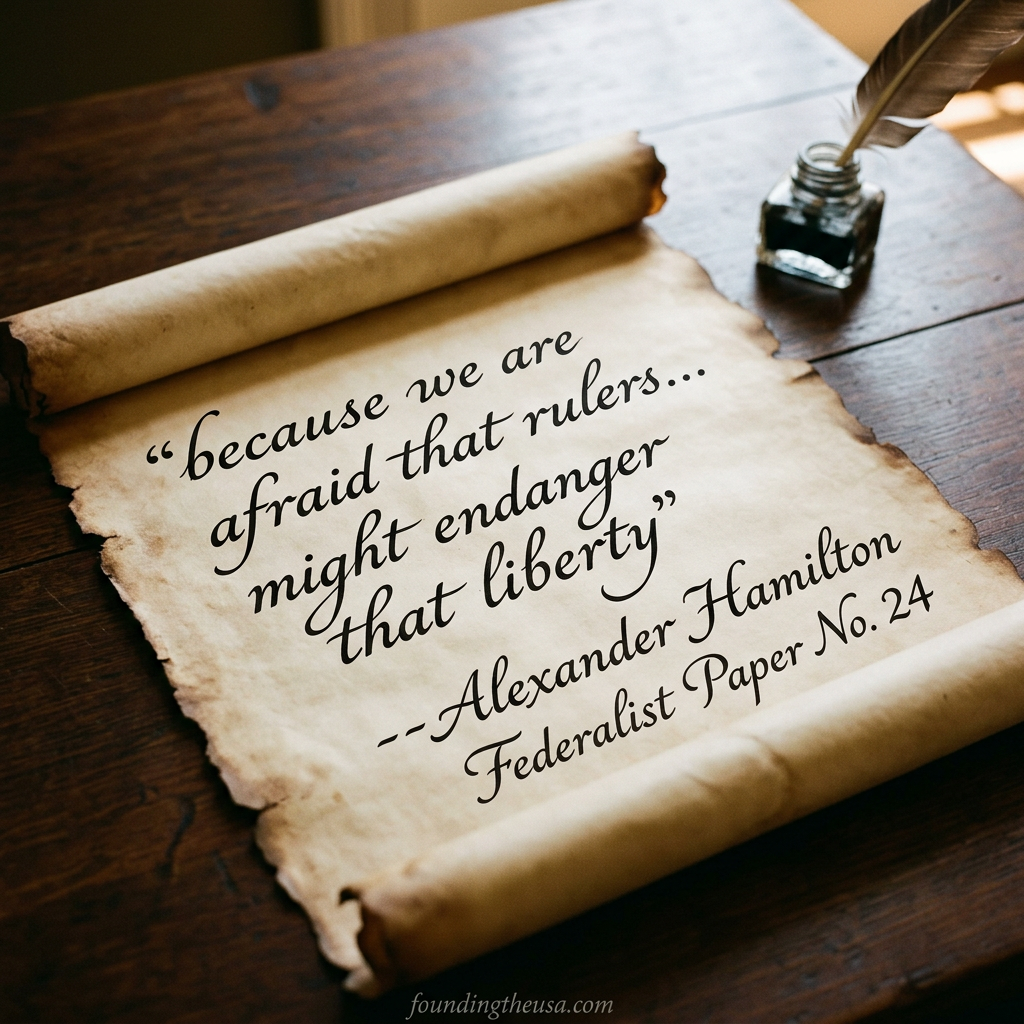
“because we are afraid that rulers… might endanger that liberty”
Hamilton is saying this kind of fear becomes self-destructive. In trying to avoid one possible abuse, it guarantees greater vulnerability to actual danger.
16. Militia alone almost cost America its independence
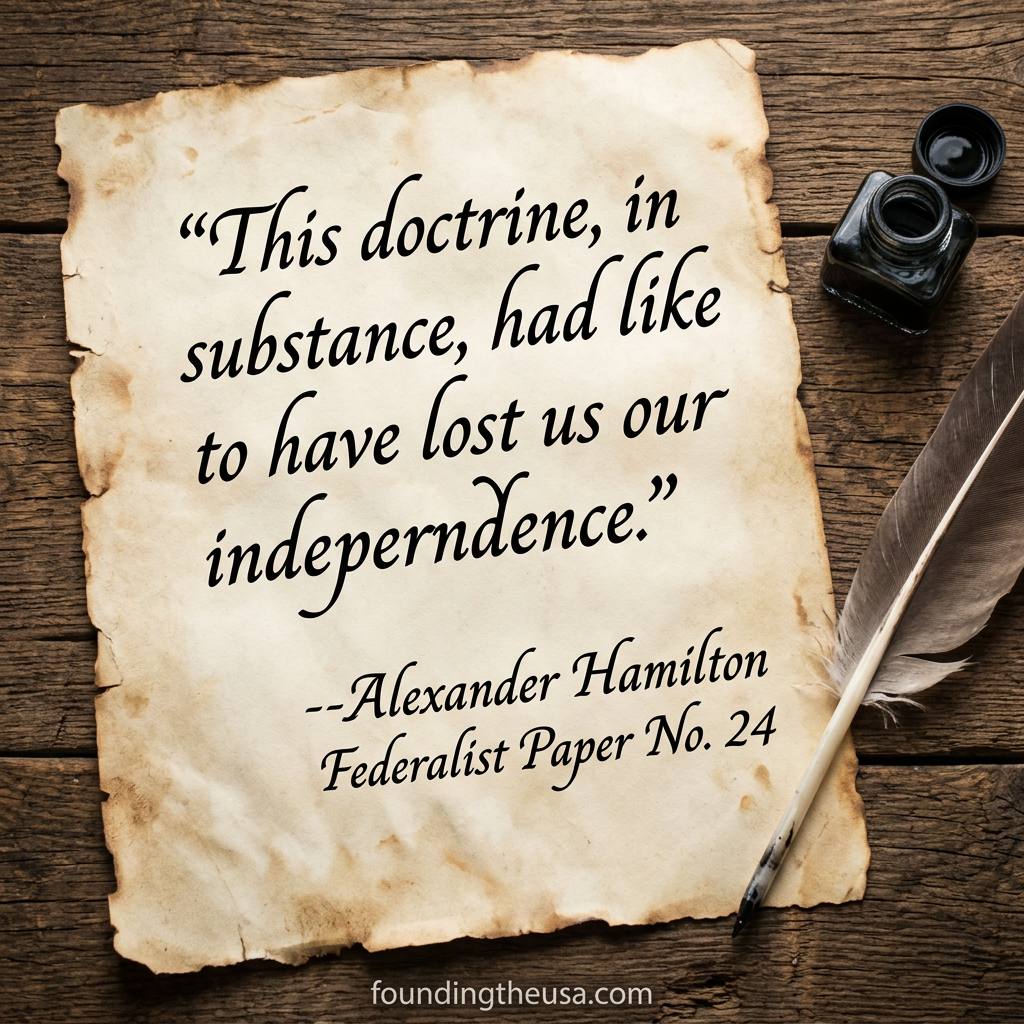
“This doctrine, in substance, had like to have lost us our independence.”
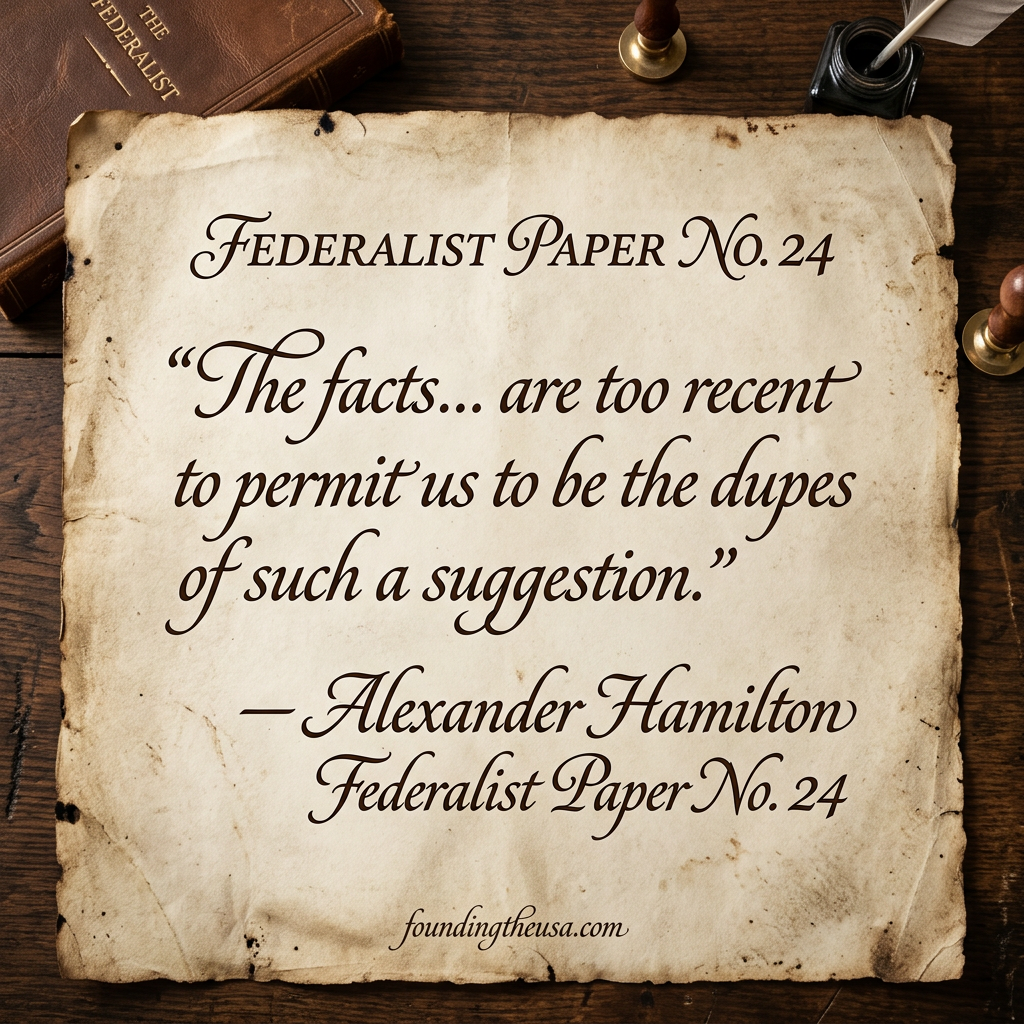
“The facts… are too recent to permit us to be the dupes of such a suggestion.”
That is a hard slap at romantic militia talk. Hamilton respects militia courage, but he says the Revolution proved militia alone could not safely carry the whole burden.
17. War is a science
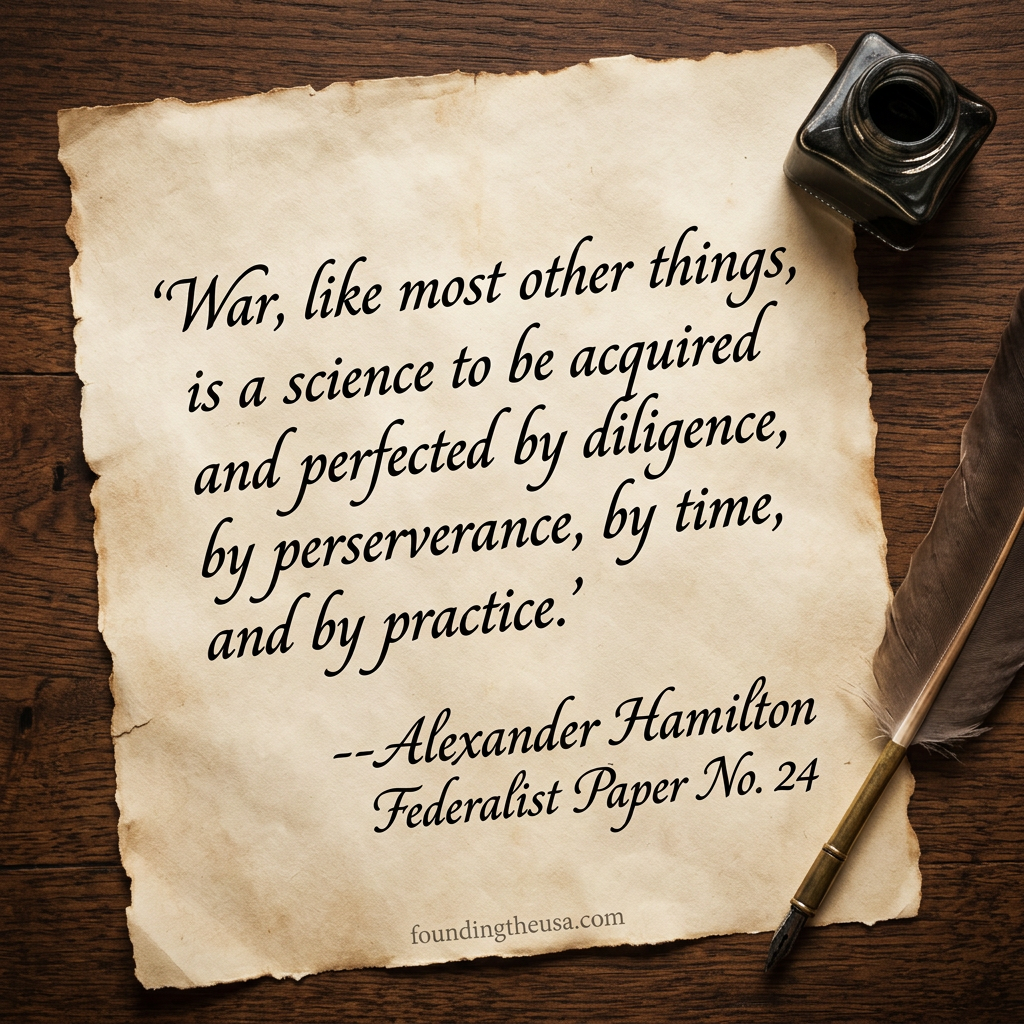
“War, like most other things, is a science to be acquired and perfected by diligence, by perserverance, by time, and by practice.”
This is one of the best-known lines in the paper. Hamilton says war cannot be improvised by patriotic enthusiasm alone. It requires training and discipline.
18. Real necessity breaks parchment bans anyway
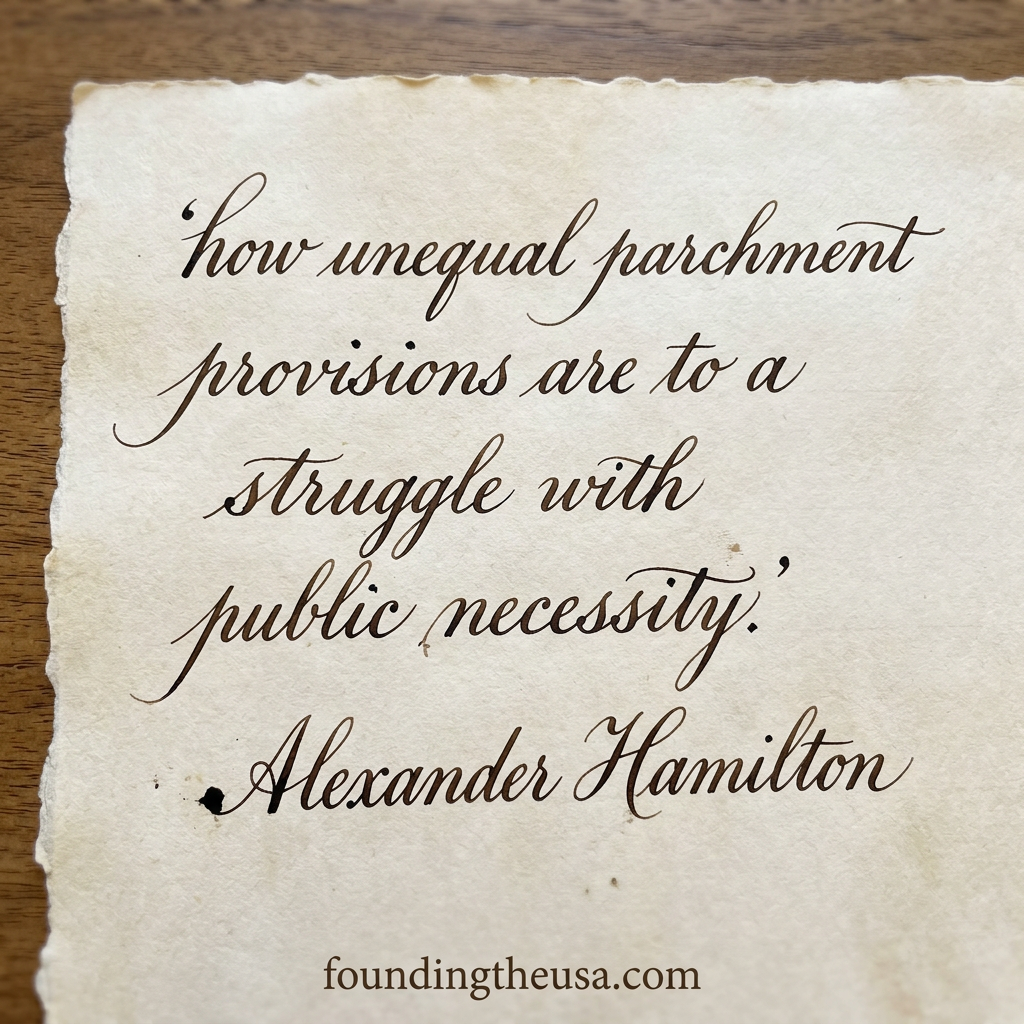
“how unequal parchment provisions are to a struggle with public necessity.”
Great line. Hamilton argues that when necessity hits, governments break unrealistic constitutional restraints. Better to frame powers honestly than force constant evasions.
19. Restrictions that cannot be observed teach bad constitutional habits
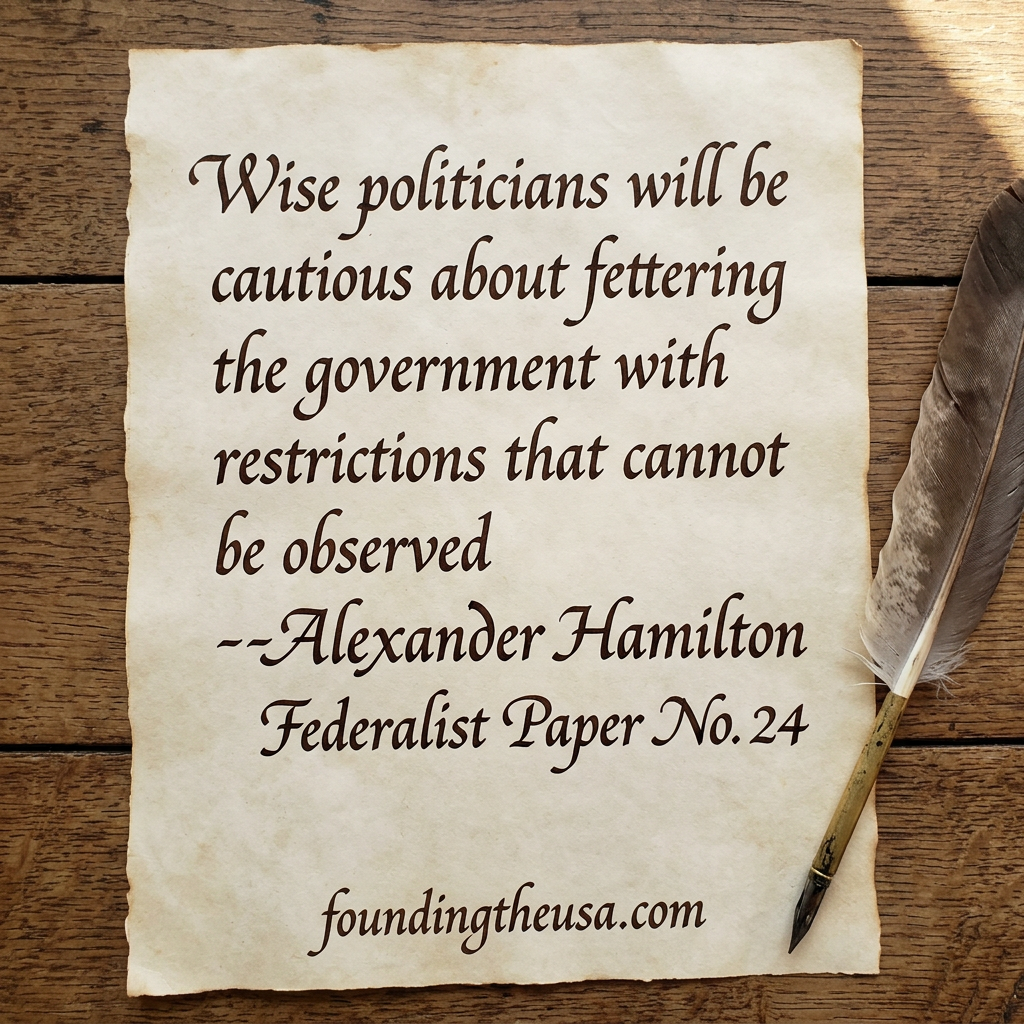
“Wise politicians will be cautious about fettering the government with restrictions that cannot be observed”
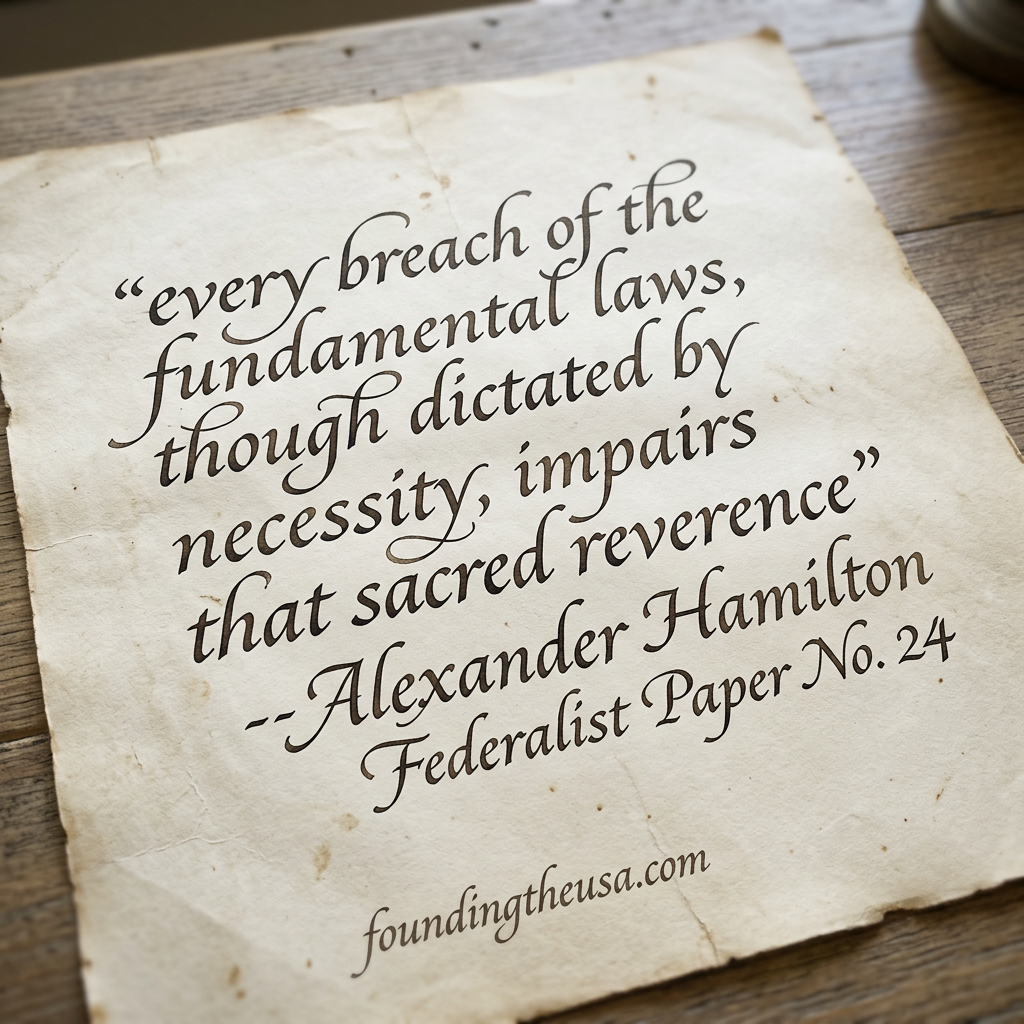
“every breach of the fundamental laws, though dictated by necessity, impairs that sacred reverence”
This is one of the deepest points in the essay. Hamilton says impossible constitutional rules are not harmless. They train governments to treat the constitution as something bendable whenever pressure rises.
Why Federalist No. 25 Works for Highlights
Federalist No. 25 works well as a highlights page because it has a clear and forceful theme: common defense must remain truly national, and constitutional rules that ignore practical security needs either weaken the country or teach it to evade its own laws.
It also pairs tightly with Federalist No. 24. No. 24 argues that the Constitution already places military power under legislative control and includes real safeguards. No. 25 presses the practical side harder, showing why fragmented military authority and rigid peacetime bans would both backfire.
Related Links
- Federalist No. 25 Full Text
- Federalist Papers
- Alexander Hamilton
- Federalist No. 24
- Articles of Confederation
- United States Constitution